|
|
May 23, 2007
Cancer and ATP: The Photon Energy Pathway
Could cancer be a functional deviation of the cellular energy production mechanism that is open to correction by relatively simple means instead of a genetic mutation that is passed down through cell division? Heinrich Kremer, MD, says that this is indeed the case. His hypothesis of a photon-mediated cellular energy pathway may turn out to substantially add to our understanding of what cancer is, and why such natural substances as curcumin may be effective cancer fighting agents.
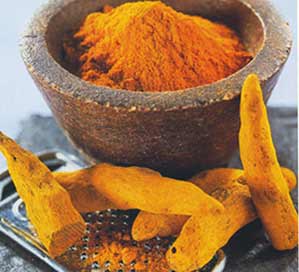
Turmeric (Curcuma longa) - a curative spice and coloring agent -
According to the World Health Organization, cancer accounted for 13 per cent of deaths world wide in 2005. The trend is rising, which means we have not found the real cause of the disease. Our efforts to treat cancer are centered on symptoms, rather than the factors that cause the disease.
The WHO's cancer information page also says that cancer is the result of a genetic failure of cells:
Cancer arises from one single cell. The transformation from a normal cell into a tumour cell is a multistage process, typically a progression from a pre-cancerous lesion to malignant tumours...
Cancer researchers however have long known that cancer cells are distinguished from their 'normal' cousins by an alteration of the cells' energy metabolism. The mitochondria inside the cells become inactive and the cells switch to a secondary mode of energy production that is based on the fermentation of sugars. This metabolic change has recently been confirmed by a study at Johns Hopkins.
The Hopkins scientists report that the loss of a single gene in kidney cancer cells causes them to stop making mitochondria, the tiny powerhouses of the cell that consume oxygen to generate energy.
Instead, the cancer cells use the less efficient process of fermentation, which generates less energy but does not require oxygen. As a result, the cancer cells must take in large amounts of glucose.
Researchers at the University of Alberta recently discovered a relatively simple way to re-activate the mitochondria and make them re-start normal energy production, using a commonly available substance, dichloroacetate or DCA:
Dr. Evangelos Michelakis, a professor at the U of A Department of Medicine, has shown that dichloroacetate (DCA) causes regression in several cancers, including lung, breast, and brain tumors.
Michelakis and his colleagues, including post-doctoral fellow Dr. Sebastian Bonnet, have published the results of their research in the journal Cancer Cell.
Scientists and doctors have used DCA for decades to treat children with inborn errors of metabolism due to mitochondrial diseases. Mitochondria, the energy producing units in cells, have been connected with cancer since the 1930s, when researchers first noticed that these organelles dysfunction when cancer is present.
According to Wikipedia, dichloroacetate decreases lactate production by shifting the metabolism of pyruvate from glycolysis towards oxidation in the mitochondria. That is the reason the substance has been used to treat lactic acidosis. Its use in cancer has only recently been pioneered and the University of Alberta researchers caution that more trials are needed, before DCA can be recommended as an anti-tumor agent.
It is against this background that we should see the discovery of Heinrich Kremer, MD, a German medical doctor who is perhaps best known for his unconventional views on AIDS. Kremer says that the current view, according to which the mitochondria's normal energy production pathway is based on chemical oxidation does not go deep enough to allow an understanding of the underlying mechanisms of cancer.
Kremer's discovery is described in his book The Silent Revolution in Cancer and AIDS, which is available here in English: http://aliveandwellsf.org/kremer/book.html and here in Italian.
The new view on cancer is explained in detail in an article titled The Secret of Cancer: Short-circuit in the Photon Switch, due for publication shortly. I will link it here as soon as it becomes available. Meanwhile, here is a sneak preview.
- - -
Cancer and ATP: The Photon Energy Pathway
(for the full article, we must await publication in the July issue of Townsend Letter for Doctors)
Although the mutation theory of oncogenesis is generally accepted today, it does not explain how cancer cells seemingly are able to evade all the body's normal mechanisms that prevent and correct such mutations, and how they can invade and metastasize in different tissues from those that are primarily concerned.
Consequently, our standard therapies, which are based on the assumption that the deviated cells must be destroyed and which attempt to do so by a slash, burn and poison approach operated by the surgeon, the radiologist and the oncologist, are of little use in prolonging the patient's life or effecting real cures.
Evolution
To understand the new concept of oncogenesis, we must take a look at the evolution of cells and organisms. Cells as present in today's organisms are the result of a fusion, in prehistoric times, of two different types of unicellular life forms into a unique symbiotic combination. A type of cell of the archaea family and another type of the bacteria family entered into symbiosis and formed what is now known as a protist. The cells of mammals including humans today contain genes from both original families. The bacterial symbionts have evolved into the mitochondria which are delegated to take care of energy production.
ATP Energy Pathways
In cancer, the bacterial symbionts go on strike - they refuse to produce any more of the ATP energy molecules they are normally busy churning out all day. The cells thus have to revert to an alternate mode of energy production (glycolysis) which involves fermentation of sugars. This is very much more inefficient than the normal cellular energy mechanism.
But more importantly, and here comes Kremer's very interesting discovery, the normal mode of energy production is not a pure chemical energy pathway. ATP (adenosine triphosphate) is made up of three molecule groups. A base adenine ring that absorbs light quanta in the near ultraviolet band of 270 nanometer wavelength, one sugar molecule and a molecular string with three phosphate groups.
The currently accepted view is that energy production and storage in ATP is by means of chemical energy, stored in the phosphate bonds. The bond energy is then released by hydrolysis in the cytoplasm, where it is used to drive energetic and metabolic processes. Not so, says Kremer. Hydrolysis only yields heat energy, which is not sufficient to drive all the various cell processes. The secret lies in the adenine groups of ATP which absorb photons, but the role of adenine is not adequately explained in the prevailing hypothesis.
The essential components of mitochondrial cell respiration are light absorbing molecules that react to frequencies from the near ultraviolet band down to the yellow/orange spectral range of visible light. Yet, the source of energy for these cellular power plants is not sunlight, as one might easily be led to assume. The flow of para-magnetically aligned electrons in the respiratory organelles gives rise to a low frequency pulsating electromagnetic field which, enormously accelerated through catalytic processes activated by enzymes, in turn activates a spin-mediated information and energy transfer from the physical vacuum, the zero point field, to the biological entity. Consequently, the human organism isn't governed by heat transfer but by a light frequency modulated energy transformation from space background or physical vacuum to the living organism.
Cancer is a result of the disturbance of the enzyme mediated transformation of that energy. The affected cells lose their ability to communicate with other cells around them and they change not only their way of making energy but they become - for all practical purposes - separate unicellular entities that must divide and form a colony to survive. That colony is what we then see as the tumor, the visible manifestation of cancer.
The exact mechanism of that transformation and how the disturbance, once active, feeds back to cause these changes in the cancer cells, is explained - it is a rather technical subject - in Kremer's paper. We will have to wait for its publication to get the whole story.
Curcumin
In the meantime, however, we can say that curcumin, a natural substance in the family of polyphenols contained in turmeric root or curcuma longa and used as a natural coloring agent and a spice, has been found to be beneficial to cancer patients in research at the Anderson Cancer Research Center. See Can a Common Spice Be Used to Treat Cancer?.
Kremer explains that the anti-cancer properties of curcumin are a consequence of its ability to absorb photons in the violet spectral range of visible light at a wavelength of 415 nanometers. This particular property of the healthy spice is what enables it to bridge the broken pathway of photonic energy production and information transfer, thus bringing the affected cells back into the fold, to make them once more function as parts of the organism.
While, admittedly, more research is needed, the pioneering efforts of Kremer will go a long way to point us in the right direction. I hope I was able to stimulate some interest in that new discovery and that you, my readers, are as eagerly awaiting publication of Kremer's research article and book in English as I am.
Watch here for links as soon as they become available.
Meanwhile, there is news that microwaves - as used in mobile telephony - drastically increase the risk of certain cancers. See Cancer Risks from Microwaves Confirmed.
See also related:
An alternative theory on cancer
"By screening for aneuploidy, you could detect the cancer early and also see what possible drugs to use and whether drugs would even help," Duesberg noted. "Then, you wouldn't have to give a cocktail of drugs that includes all the best poisons, but you could leave out those you could tell wouldn't work. If you could cut chemotherapy drug toxicity in half or two-thirds, and direct it better at cancer, that is some progress. But it is not a cure."
Humans Run On Zero Point Energy -says Scientist
Kremer brings a quantum physics understanding to the nature of the energy system in mitochondria. He says that chemical energy theory of ATP is wrong. Kremer says we run on Zero Point Energy --extracted from the vaccum by modulation of a low frequency electromagnetic field associated with the ATP molocule.
Turmeric, Spice of Health
Turmeric comes from the root of the Curcuma longa plant and has a tough brown skin and a deep orange flesh. The volatile oil fraction of turmeric has been demonstrated significant anti-inflammatory activity in a variety of experimental models. Even more potent than its volatile oil is the yellow or orange pigment of turmeric, which is called curcumin. Curcumin is thought to be the primary pharmacological agent in turmeric. In numerous studies, curcumin's anti-inflammatory effects have been shown to be comparable to the potent drugs hydrocortisone and phenylbutazone as well as over-the-counter anti-inflammatory agents such as Motrin. Unlike the drugs, which are associated with significant toxic effects (ulcer formation, decreased white blood cell count, intestinal bleeding), curcumin produces no toxicity.
When Science Fiction Becomes Science Fact: Electromagnetism and Life
posted by Sepp Hasslberger on Wednesday May 23 2007
updated on Tuesday December 7 2010
URL of this article:
http://www.newmediaexplorer.org/sepp/2007/05/23/cancer_and_atp_the_photon_energy_pathway.htm
Related Articles
1953 Fitzgerald Report - Suppressed Cancer Treatments
"In the 1950's, Congressman Charles Tobey enlisted Benedict Fitzgerald, an investigator for the Interstate Commerce Commission, to investigate allegations of conspiracy* and monopolistic practices on the part of orthodox medicine. This came about as the result of the son of Senator Tobey who developed cancer and was given less than two years to live by orthodox medicine. However, Tobey Jr., discovered options in the alternative field, received alternative treatment and... [read more]
April 03, 2007 - Chris Gupta
Cancer Research - A Super Fraud?
"Everyone should know that most cancer research is largely a fraud and that the major cancer research organisations are derelict in their duties to the people who support them." - Linus Pauling PhD (Two-time Nobel Prize winner). Have you ever wondered why, despite the billions of dollars spent on cancer research over many decades, and the constant promise of a cure which is forever "just around the corner", cancer continues... [read more]
July 02, 2003 - Chris Gupta
Fluoride-Cancer Study Cover Up
This update includes Pam Killeen's recent (August 2005) interview with Paul Connett, PhD. This excellent 58 minute discussion will give you a quick snapshot of this whole sordid issue and is must hear! The following link is referenced in the above interview and is an eye opener: 50 Reasons to Oppose Fluoridation. This is an absolute required reading for anyone with children or planning to have them! Allowing this madness... [read more]
August 17, 2005 - Chris Gupta
Cancer: Intravenous Vitamin C Effective Treatment
Studies during the 1970s first suggested administration of high doses of ascorbate might provide a clinical benefit for treating cancer, but later studies using the same high doses found no benefit. However, researchers now say the original studies used intravenous and oral ascorbate, while subsequent studies used only oral administration. Recognizing those differences might account for the disparate clinical outcomes, Mark Levine and colleagues at the National Institutes of Health... [read more]
September 13, 2005 - Sepp Hasslberger
Cancer And Micronutrients: A Connection Worth Exploring?
According to German doctor Ryke Geerd Hamer's iron-bound rules of cancer, the development of a tumoral growth invariably follows a highly traumatic experience that is too intense to have been fully "confronted" or looked at. Each different kind of trauma, according to Hamer, leads to corresponding brain edemas that can be detected by modern scanning methods and eventually to a tumorous growth or, in the case of bone cancer, to... [read more]
March 15, 2006 - Sepp Hasslberger
Flowers and Spices: Ayurveda or Toxic Chemotherapy?
Ayurvedic medicine uses foods, spices, flowers, and other remedies found in nature to both prevent and heal. Compared with Western medicine, which has a virtual monopoly on deciding what is "scientific" and what is not, the ancient healing art of the Indian subcontinent is undervalued although according to the World Health Organization, 65% of the population in rural areas in India use Ayurveda and medicinal plants to help meet their... [read more]
April 06, 2006 - Sepp Hasslberger
Readers' Comments
Professor Bruce Ponder of the University of Cambridge led a study that has opened up the field of chromosomal aberrations and screeming mutated genes that increase the risk of developing cance by up to 60 (NST Tuesday, May 29, 2007, p 27)
The success of the research is its ability to scan large stretches of the human genome through a new technique to assess 200,000 blocks of DNA simultaneously instead of one by one. While that research study concentrated on genes associated with breast cancer the same technique can used in patients with other forms of cancers. The technique speeds up the rate of gene identification, especially mutated genes for a range of cancers and it helps to calculate a woman\'s predisposition to develop breast cancers over a lifetime.
Certainly, it is am important discovery and all the more important when it is properly understood in terms of preventive medicine. Firstly, there is need to understand what causes genetic mutation and chromosomal aberrations, not just the mechanisms involved but the damage initiated at the molecular and submolecular level. It is clear that while secondary free radicals such as the peroxynitrite radical tends to cause oxidative damage to cell membranes the hydroxyl radical, produced by the reaction between the superoxide and hydrogen peroxide produced during cell metabolism can oxidatively damage the DNA molecule by attacking the hydrogen bonds. Enzymes involved in the replication of genetic material can also be oxidatively damaged by oxidative stress produced by both the peroxynitrite and hydroxyl radicals.
So, the first point to note is that people with genetic mutations have had their genetic material esposed, at some point, to excess free radicals or chemical stressors or drugs that generate free radicals in the body.
Excess superoxide in the cytoplasm, on the other tends to raise the acidity that shuts down the antioxidant enzyme system involved in the Kreb\'s cycle and that can favour the rerouting of the glucose molecule through another pathway that yields alcohol as the energy molecule of the cell. As there is no ATP produced the cell resorts the alcohol breakdown for its energy and that effectively transforn it into a cancer cell.
Hence, strictly speaking, it is not the genes or mutated genes that cause cancer. The real cause is biochemical in nature that depends very much on the free radical-antioxidant equilibrium wherein excess free radicals lead to oxidative stress and oxidative damage. Mutated genes and chromosomal aberrations, do not by them selves cause the formation of cancer cells but indeed when these are present, the risk of developing cancers increases and quite rightly, there is no direct link but it serves as aclue to predisposition to cancers.
There are studies that have documented a relatively high population of free radicals in people with trisomy-21 and other similar aberrations. Also, diabetics whose blood sugar levels are high also have relatively higher populations of free radicals in their body quite similar to obese people as free radical scavenging activity in fatty tissue is much slower that in the watery medium. Hence reducing abdominal girth as a way to reduce visceral fat tends ti improve blood chemistry and reduces risk to cancers. Another recent study clearly indicated that diabetics have a incidence in fertility problems and risk damage to membranes and the DNA in spermatozoa.
At the biochemical level, how is this clue to a predisposition to cancers explained? Well, normal and undamaged genes produce normal biomolecules that are neutral or they may produce antioxidant molecules. Some types of damage to the genetic material may slow down cell division but some types of damage in mutated genes may produce abnormal molecules that act like free radicals and can initiate free radical chain reactions or produce localised damage to cell membranes and aid the accumulation of the superoxide in the cytoplasm by depleting the antioxidant enzymes within the cell or imparing the MT protein system in the mitochondria.
From this perspective, the scanning test devised by the Cambridge research team has wide implications in routine scanning for preventive medicine. Once the predisposition has been identified, a diet that ensures a high intake on natural antioxidants and the elimination of trans-fatty acids and TOFU and long-chain fatty acids, elimination of ciggarettes and alcohol and elimination of food with synthetic presevatives and syhthetic vitamins will naturally reduce the risk of developing cancers.
BELDEU SINGH
(copyright: porixbiotech sdn bhd)
Posted by: BELDEU SINGH on June 3, 2007 10:46 PM
Thanks for this great article, Sepp!
Kremer\'s Photon Switch article will be in the August/September issue of the Townsend Letter.
Posted by: David Lowenfels on June 7, 2007 02:25 PM
This is one of the most significant articles I\'ve ever seen posted here. Your efforts to bring new, exciting and credible information is much appreciated.
Posted by: Sharry Edwards on June 10, 2007 10:32 AM
read once were the cells can take only so much abuse (toxin exposure) before going to fermantation ...once getting to the 100 mark their was no going back ...is this thinking still hold true (can nature repair itself)
Posted by: darrell dixon on July 22, 2007 04:39 PM
CHROMOTHERAPY IN CANCER and "STRANNIK SYSTEM" Dear Professor, I want to promote energy assessment by Energo-Electro-Photography(Virtual Scanning-"STRANNIK") in cancer and generally become a diagnostic method, and rebalance energy irradiation with light color (color therapy). Please join me in this research proposal, as leader, because I can not go alone. The basic idea of this theory is that the oxidation of hydrogen and carbon atoms, arising from the degradation of carbohydrates, is by two distinct processes based on oxidation-reduction electron transfer and photochemical process of energy release on the basis of color complementary, predominance of one or another depending on intracellular acid-base balance. Final biological oxidation, the production of CO2 and H2O, should be reconsidered in the sense that a distinction must be made between the oxidation of carbon and hydrogen oxidation. In the case of carbon atoms, cytochrome oxidase must have an alkaline chemical structure, to be colored green and so can absorb additional red energy carbon atoms derived from carbohydrate. For the oxidation of H atom cytochrome oxidase must have a acidic chemical structure, to be colored red, and so can absorb additional green energy hydrogen atom derived from carbohydrate. We propose an experiment to prove that the final biological oxidation, in addition to its oxidation-reduction, with formation of H2O and CO2,there is a photochemical effect, by which energy is transferred from the H atom, or C, process is done selct, the colors, complementary colors on the basis of the structures involved are colored (red hemoglobin Fe, Mg chlorophyll green, blue ceruloplasmin Cu, Fe cytochrome oxidase red, green cytochrome oxidase with Cu etc.). The basic idea is that if life pigments (chlorophyll, hemoglobin, cytochromes), which provides energy metabolism of the cell, are colored, we can control their activities through chromotherapy, on the basis of complementary color and energy rebalance the body, with a figured COLOR ELECTROPHOTOGRAPHY. In my opinion, at the basis of malign transformation is a disturbance of energetical metabolism, which reached a level that cell can not correct (after having succeeded before, many times), disturbance that affects the whole body in different degrees and requires corection from outside starting from the ideea that the final biological oxidizing takes place through photochemical process with releasing and receieving energy. I SUGGEST TO YOU AN EXPERIMENT: TWO PLANTS, A RED (RED CORAL) LIGHT ONLY, IN BASIC MEDIUM, WITH ADDED COPPER, WILL GROW, FLOWER AND FRUIT WILL SHORT TIME, AND THE OTHER ONLY BLUE-GREEN LIGHT(TOURQUOISE), IN AN ACID MEDIUM, WITH ADDED COPPER CHELATOR , WHICH GROWS THROUGHOUT WILL NOT GROW FLOWERS AND FRUIT WILL DO. CULTURE OF NEOPLASTIC TISSUE, IRRADIATED WITH MONOCHROMATIC BLUE-GREEN (TOURQUOISE) LIGHT, IN AN ALKALINE MEDIUM, WITH ADDED COPPER, WILL IN REGRESSION OF THE TISSUE CULTURE. CULTURE OF NEOPLASTIC TISSUE, IRRADIATED WITH RED (RED CORAL) LIGHT, IN AN ACID MEDIUM, WITH ADDED COPPER CHELATOR, WILL LEAD TO EXAGERATED AND ANARCHICAL MULTIPLICATION. If in photosynthesis is the direct effect of monochromatic irradiation, in the final biological oxidation effect is reversed. Exogenous irradiation with green, induces endogenous irradiation with red, and vice versa. "About Carcinogenesis." Final biological oxidation, the production of CO2 and H2O, should be reconsidered in the sense that a distinction must be made between the oxidation of carbon and hydrogen oxidation. In the case of carbon atoms, cytochrome oxidase must have an alkaline chemical structure, to be colored green and so can absorb additional red energy carbon atoms derived from carbohydrate. For the oxidation of H atom cytochrome oxidase must have a acidic chemical structure, to be colored red, and so can absorb additional green energy hydrogen atom derived fromcarbohydrate.In my opinion, at the basis of malign transformation is a disturbance of energeticalmetabolism, which reached a level that cell can not correct (after having succeeded before, many times), disturbance that affects the whole body in different degrees and requires corection from outside starting from the ideea that the final biological oxidizing takes place through photochemical process with releasing and receieving energy. "Duality of cytochrome oxidase. Proliferation (growth) and Differentiation (maturation) cell." Cytochrome oxidase is present in two forms, depending on the context of acid-base internal environment : 1.- Form acidic (acidosis), which contains two Iron atoms, will be red, will absorb the additional green energy of the hydrogen atom, derived from carbohydrates, with formation of H2O, metabolic context that will promote cell proliferation. 2.-Form alkaline(alkalosis), containing two Copper atoms, will be green, will absorb the additional red energy of the carbon atom, derived from carbohydrates, with formation of CO2, metabolic context that will promote cell differentiation. It is known that in conditions of acidosis (oxidative potential), the principle electronegativity metals, Copper is removed from combinations of the Iron. So cytochrome oxidase will contain two atoms of iron instead of copper atoms, which changes its oxidation-reduction potential, but (most important), and color, which radically change its absorption spectrum, based on the principle of complementary colors. According to the principle electronegativity metals, under certain conditions the acid-base imbalance (acidosis), iron will replace copper in combination,leading to changing oxidation-reduction potential, BUT THE COLOR FROM GREEN, TO REED, to block the final biological oxidation and the appearance of aerobic glycolysis.
In the final biological oxidation, in addition to an oxidation-reduction process takes place and a photo-chemical process,based on complementary colors, the first in the electron transfer, the second in the energy transfer. A body with cancer disease will become chemically color "red"(Acid, as evidenced by laboratory), and in terms of energy, "green"(visible by color Electrophotography ;VIRTUAL SCANNING). A healthy body will become chemically color"green"(Alkaline,as evidenced by laboratory) and in terms of energy, "red" (visible by Electrophotography ; VIRTUAL SCANNING). (Green body) with alkaline chemical structure, with energy connection type C = O, and red energy , from the oxidation of the carbon energy C = O derived from carboxylic acids. (Red body) with acid chemical structure, with connections Carbon non-energy C-OH, (non-energy, phenolic acids, with strong oxidizing, prone to multiplication), and green energy , which comes from oxidation of hydrogen atoms derived from carbohydrates). Carbon Energy O ::C:: O; Non-Energy Carbon :O: C :O: I want to promote energy assessment by Energo-Electro-Photography(STRANNIK VIRTUAL SCANNING) in cancer and generally become a diagnostic method, and rebalance energy irradiation with light color (color therapy). Please support me in this research, as leader of the project and scientific coordinator. This process is carried out based on complementary colors, which are coenzymes oxidative dehydrogenation and oxidative decarboxylation is colored . It reveals the importance of acid-base balance, the predominance of the acidic or basic, as an acid structure (red), not only can gain energy from the carbon atom red (the principle of complementarity), but can not assimilate (under the same principle). It must therefore acid-base balance of internal environment, and alkalinization his intake of organic substances by the electron donor. By alkalinization (addition of electrons) will occur neutralize acid structures, the red, they become leucoderivat, colorless, and inactive, while the basic, which because of acidosis became neutral, colorless and inactive, will be alkaline in electron contribution, will be in green, and will absorb red energy from the carbon atom. So, on two kinds of vital energy, it is clear correlation between the chemical structure of the cell (body),and type of energy that can produce and use. Thus a cell with acidic chemical structure, can produce only energy by oxidative dehydrogenation (green energy), because the acid can only be active coenzymes with acid chemical structure, red, will absorb the complementarity only green energy of hydrogen. Basic structures which should absorb red energy from carbon , are inactive due to acid environment, which in turn chemically in leucoderivat, so colorless structures, inactive. Conversion of these structures to normal, operation by alkalinization could be a long lasting process, therefore, we use parallel chromotherapy, based on the fact that these COENZYMES INVOLVED IN BIOLOGICAL OXIDATION FINALS ARE COLORED AND PHOTOSENSITIVE.
If we can determine the absorption spectrum at different levels, we can
control energy metabolism by chromotherapy - EXOGENOUS MONOCHROMATIC IRRADIATION .
Energy absorption in biological oxidation process itself, based on complementary colors, the structures involved (cytochromes), is
the nature of porphyrins, in combination with a metal becomes colored, will absorb the complementary color, corresponding to a specific absorption spectrum, it will be in - ENDOGENOUS MONOCHROMATIC IRRADIATION. This entitles us to believe that: In photosynthesis,light absorption and its storage form of carbohydrates, are selected,the colors, as in cellular energy metabolism, absorption of energy bythe degradation of carbohydrates, is also done selectively, based on complementary colors.
Thus, exogenous irradiation with monochromatic green will neutralize, by complementarity, coenzymes red, acidic. In will reactivate alkaline coenzymes, which have become due acidosis leucoderivat, so colorless and inactive.
Without producing CO2, carbonic anhydrase can not form H2CO3, severable and thus transferred through mitochondrial membrane. Will accumulate in the respiratory Flavin, OH groups, leading to excessive hydroxylation, followed by consecutive inclusion of amino (NH2). It is thus an imbalance between
the hydrogenation-carboxylation and hydroxylation-amination, in favor of the latter. This will predominate AMINATION and HYDROXYLATION at the
expense CARBOXYLATION and HYDROGENATION, leading to CONVERSION OF
STRUCTURAL PROTEINS IN NUCLEIC ACIDS. Meanwhile, after chemical criteria, not genetic, it synthesizes the remaining unoxidized carbon atoms, nucleic bases "de novo" by the same process of hydroxylation- amination,leading to THE SYNTHESIS OF NUCLEIC ACIDS "DE NOVO".
Please get involved in this project as a scientific leader. Sincerely yours, Dr.Viorel Bungau Romania Libertatii 22 Cristian 507055 Brasov
Posted by: Viorel Bungau on March 23, 2016 10:55 AM

This work is licensed under a Creative Commons License.
These articles are brought to you strictly for educational and informational purposes. Be sure to consult your health practitioner of choice before utilizing any of the information to cure or mitigate disease. Any copyrighted material cited is used strictly in a non commercial way and in accordance with the "fair use" doctrine.
2879
|
|