Health 
Natural Health is based on prevention and on keeping our bodies in good shape. That includes moving our bodies, eating well, topping up nutrients where needed and avoiding all kinds of poisons. It also is based on real choice in medicine. I want to be able to choose what kind of medico or other health practitioner to consult, what kinds of remedies to use if I do get sick.
Some of these alternatives are extremely effective yet they are not being promoted. I wonder why.
October 27, 2015
Categories
Perhaps the biggest ongoing medical scandal of the past hundred years is the fact that it has been known since 1911 that Multiple Sclerosis is caused by a bacterium, and that the Big-Pharma-controlled medical-industrial complex covered this up in order to make money selling symptom relievers to MS patients. At the lower levels there is no cover-up at all, but simply human nature at work, as we wrote about here, to dispel the notion that we are "conspiracy theorists". Since 1911, overwhelmingly much medical research has been conducted where living Borrelia bacteria were found in the brains of people who were diagnosed with MS.
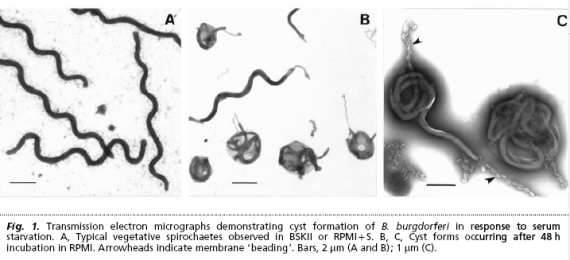
Time and time again. By at least a dozen medical researchers. In at least ten countries. Since 1911 – the past one hundred years. Several older but also recent autopsy findings linked to in this article found that all deceased MS patients' brains harbored living Lyme spirochetes. Even when tests, notorious for their large percentage of false negatives were used on living MS patients, staggeringly many tested positive for active Lyme borreliosis.
Continue reading "Multiple sclerosis is Lyme disease: Anatomy of a cover-up"
posted by Sepp Hasslberger on Tuesday October 27 2015
updated on Thursday January 26 2017
Permalink
| Comments (2)
| No trackbacks
Trackback link: http://www.newmediaexplorer.org/cgi-bin/mt-tb.r484.cgi/2606
July 11, 2015
Categories
In 2007, I posted two articles on this site suggesting that cancer had something to do with the energy mechanism of the human body. I am coming back to this through a comment on one of those articles by Viorel Bungau, a family medical doctor in Romania.
The two previous articles are:
Cancer and ATP: The Photon Energy Pathway
Could cancer be a functional deviation of the cellular energy production mechanism that is open to correction by relatively simple means instead of a genetic mutation that is passed down through cell division? Heinrich Kremer, MD, says that this is indeed the case. His hypothesis of a photon-mediated cellular energy pathway may turn out to substantially add to our understanding of what cancer is, and why such natural substances as curcumin may be effective cancer fighting agents.
Cancer: The ATP-Photon Hypothesis
Could cancer be a result of the functional degradation of a cellular photon absorption pathway that is basic to the production of ATP, the cellular energy molecule? And could tumor cells merely be executing an age-old survival program they retained from the time of unicellular existence? An interesting new hypothesis of cancer causation spells out why some cells all of a sudden start dividing to form tumors, and how that urge to sustained growth could likely be 'switched off.
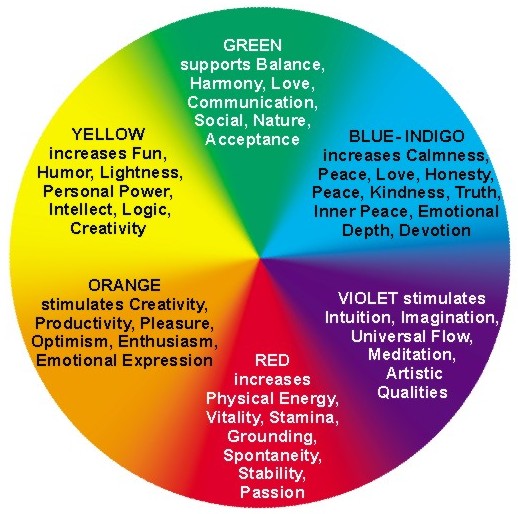
Chromotherapy: The healing power of colors (image found here)
Here (with some minor edits) is what Dr Bungau originally posted as a comment on the second article...
CHROMOTHERAPY IN CANCER
Dear Professor, Medical practitioner,
I am passionate about cancer research. After years of study, we came to a hypothesis to be verified experimentally in collaboration with a field center. After many attempts (direct approach), no one has agreed to do this experiment. Please help make this research proposal possible. If proven true, it would change the medical approach to diagnosis and treatment of cancer and beyond.
Yours sincerely,
Dr.Viorel Bungau
Continue reading "Chromotherapy in Cancer"
posted by Sepp Hasslberger on Saturday July 11 2015
updated on Thursday January 26 2017
Permalink
| Comments (1)
June 02, 2014
Categories
Inclined Bed Therapy or IBT is the brain child of Andrew Fletcher, who discovered in the 1990's that gravity actually helps to drive circulation of the sap in trees. From there, it was a short step to ask whether this was also true for animals and humans. This posed the question "why on Earth do people sleep flat?"
So Andrew suggested that people slightly raise the head end of their bed and see if any changes in their health are noticeable.
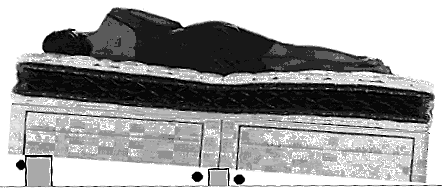
This is one of the numerous anecdotes ... stories of personal success people have reported after raising the head end of their bed by just five or six inches.
"Over two years ago I sat in the armchair reading a small advert which asked people to raise their bed by six inches at the head and to reply and tell what benefits had been noted. (No explanation was given)
At the time I could not move my neck to my left or right side and it ached continuously. I was unable to sleep at night as i could not get comfortable. I was only able to turn by gently easing myself. It took about three to four turns. Getting out of bed was a major obstacle. I needed help to dress and undress.
I spent most of my nights in the chair with the result that I was always tired and had no energy.
My problem is osteoporosis of the upper and lower spine. I had tried hormone replacement therapy and wasted a small fortune with bone specialists and osteopaths.
I was resigned to living my days out as best I could, having been told that there was nothing more that could be done for me.
I expected nothing but had nothing to lose, so Harry raised the bed by six inches. We did not take it very seriously but were happy to try anything.
On the fourth night I had the first full nights sleep since I don't remember when. By the end of the week I was sleeping naturally and turning over with ease. My dressing was a problem no longer, each day it became easier. I was able to turn my head without pain, right or left, to see the clock without getting up from my chair.
There have been many other benefits too. I have worn glasses from the age of seven years and I am now sixty eight years. Last year was the first time I was told that there was a small improvement.
My hair appears thicker, my hair brush needs cleaning less often.
Harry had a large suppurating scar since he was six years old. He has had to continually dress it all of his life. But now it has healed up. His ear which constantly gave him trouble with a discharge has now cleared up completely.
We both feel that the clock has been put back for us!"
Ruby, 2nd April 1998
Other such stories can be found on the Inclined Bed Therapy website
and on the facebook page with the same name
Continue reading "Inclined Bed Therapy: Tilt your bed for healthful sleep"
posted by Sepp Hasslberger on Monday June 2 2014
updated on Thursday January 26 2017
Permalink
| Comments (2)
January 05, 2014
Categories
After conducting "one of the most comprehensive risk assessments of aspartame ever undertaken", the European Food Safety Authority has released its verdict on 10 December 2013.

The agency came to the conclusion that aspartame and its breakdown products are "safe for human consumption at current levels of exposure".
The EFSA press release says that this was an important step forward in "strengthening consumer confidence in the scientific underpinning of the EU food safety system and the regulation of food additives".
So the message seems to be that we should all just move on to other things. Leave aspartame alone and better yet - drink some of that "diet" Coke.
But should we really?
Could perhaps the power of money and influence behind big food have had a determining effect on that decision? We cannot be certain what exactly caused the EU regulator to give aspartame a clean bill of health rather than to acknowledge the sweetener's widely known dangers. Fact is - they disregarded every single study that showed aspartame to have adverse effects.
Prof. Erik Millstone of the University of Sussex Science and Technology Policy Research Unit believes that EFSA has arrived at its conclusion by opportunistic interpretation of the studies that were reviewed. Most of the industry funded studies were given straight A's, while independent studies were - without exception - given an 'F' rating. Millstone says that
"The EFSA Panel opportunistically accepted at face value almost all of the studies suggesting that aspartame is harmless, while entirely discounting every single study indicating that aspartame may be harmful, even though the quality, power and sensitivity of many of the studies that were discounted were markedly superior to those of the contrary studies deemed reliable."
Continue reading "European Food Safety Authority cherry picks evidence - finds Aspartame completely safe"
posted by Sepp Hasslberger on Sunday January 5 2014
updated on Thursday January 26 2017
Permalink
| No comments
Multiple sclerosis is Lyme disease: Anatomy of a cover-up
October 27, 2015
Chromotherapy in Cancer
July 11, 2015
Inclined Bed Therapy: Tilt your bed for healthful sleep
June 02, 2014
European Food Safety Authority cherry picks evidence - finds Aspartame completely safe
January 05, 2014
Did Aspartame kill Cory Terry?
November 08, 2013
Retroviral particles in human immune defenses - is AIDS orthodoxy dead wrong?
August 11, 2013
European Union seeks consumer input on organic agriculture
January 18, 2013
Missing folate genes and AIDS - treat hypomethylation with nutrients, not toxic drugs!
October 04, 2012
Whooping cough vaccine does not prevent disease - it causes more severe outbreaks
August 20, 2012
Codex decides to adopt ractopamine standard against consumer objections
July 06, 2012
Infoholix on CAM - Complementary and Alternative Therapies
February 09, 2012
FDA purposely hid aspartame dangers: open letter to the European Food Safety Authority
February 03, 2012
Does smoking tobacco fulfill a nutritional need?
January 25, 2012
Supplements: The Real Story - Natural or Synthetic? Foods or Tablets?
January 19, 2012
Aids: An Iatrogenic Depopulation Strategy?
December 28, 2008
Fear of the Invisible - The Virus that never was
November 25, 2008
JUPITER Cholesterol Drug Trial: Marketing Tactics Threaten Public Health and Wealth
November 17, 2008
Enzymes: Non Toxic Biopesticides
September 23, 2008
MMR Vaccine damage - Conflicted Prosecution
September 22, 2008
Aspartame-Induced Hypertension
September 17, 2008
Vaccines: To Heal or Not to Heal
September 16, 2008
Diabetes - Why Vitamin C is important
September 09, 2008
From Avoiding Deficiency to Optimal Health - RDA Focus 'Must Change'
August 30, 2008
Evolved Reduced Utilization of Selenoproteins in Human Biochemistry?
August 23, 2008
Codex Alimentarius: Globalizing Food and Health
August 12, 2008
The Cholesterol Scare - Are You A Victim?
August 06, 2008
Vitamin A and D - Synergy and Balance
July 23, 2008
Seizure inducing aspartame added to anti-seizure drugs
July 17, 2008
Cholesterol Drugs for Kids? Pharma - Quo Vadis
July 07, 2008
Seeds of Destruction -
June 19, 2008
Most Diseases Caused by Medical System?
June 10, 2008
Sugar Blues: Alcoholism, Diabetes and Hypoglycemia
June 05, 2008
THE TRUTH ABOUT HOMEOPATHY - Dispelling the MYTHS that Surround it!
May 30, 2008
Rethinking Aids Day - Scientists Call for New Thinking on HIV
April 23, 2008
EU Scientific Committee: Mercury in dental fillings 'no danger'
April 03, 2008
Neuropsychiatric Genetics fails to find cause of mental illness
March 27, 2008
Statins Inhibit Important Biochemical Pathway - Cause Predictable 'Side Effects'
March 17, 2008
MMR Vaccine Damage: Dr Wakefield Defends Research
March 05, 2008
The Importance of Iodine for Good Health
March 04, 2008
Will Europe Restrict Herbs, Vegetable Extracts?
February 25, 2008
Expert Patients - A New Healthcare Paradigm
February 21, 2008
World Health Organization 'Paralyzed by Nuclear Lobby'
February 01, 2008
Kaushalya never was HIV positive
January 25, 2008
Psychopharmacology: Critical Psychiatry
January 18, 2008
AIDS: The Mbeki Challenge
January 11, 2008
Cultural Dwarfs and Junk Journalism - Quackbusters on the loose
January 03, 2008
Whistleblower Sues Pfizer Over Deceptive Lipitor Marketing
December 20, 2007
What Really Killed the Dinosaurs?
December 13, 2007
Vitamin B12 Prevents Alzheimer's, Depression
November 28, 2007
Healing Psychiatry
November 07, 2007
EU Commissioner Kyprianou shrugs off Consumer Concerns over Nutrients
October 31, 2007
Guinea Pig Kids - 'Aids Denial' and Human Experiments
October 29, 2007
Proposed European 'Nutrient Safety Levels' Not Fit For Purpose
October 24, 2007
Codex Alimentarius: Will EU Laws Become World Standard?
October 15, 2007
Should We Discard Herbal Medicine - Unless Provided by Pharma?
October 08, 2007
Bush Veto of Child Healthcare Bill Leaves Mercury in Vaccines
October 04, 2007
Aspartame Triggers 'Psychiatric Disorders'
September 26, 2007
AIDS Diagnosis Based on Pseudo Science?
September 20, 2007
Low Cholesterol Found To Increase Cancer Risk
September 11, 2007
Cancer: The ATP-Photon Hypothesis
August 28, 2007
Lilly Sued Over Zyprexa Death
August 25, 2007
Statin Drugs Cause Amnesia, Behavioral Disorders and Cognitive Loss
August 14, 2007
Phytonutrients: Healthy Foods Prevent Cancer
July 25, 2007
Hormone Replacement: The Symptoms of Menopause
July 19, 2007
Low Dose Naltrexone in AIDS, Cancer and Autoimmune Diseases
July 10, 2007
Codex Alimentarius: Corporations Forge Global Food Rules
July 04, 2007
New Italian Study Confirms: Aspartame is a Carcinogen
June 19, 2007
Charles Walters: Minerals for the Genetic Code
June 04, 2007
Cancer and ATP: The Photon Energy Pathway
May 23, 2007
Big Pharma's Cholesterol Roulette - Statins and Glyconutrients
May 15, 2007
Confined Animal Feeding Operations Spearhead Corporate Food Monopoly
May 09, 2007
Alternatives to AZT in Aids Patients
May 07, 2007
European Food Regulation and 'Intended Normal Use'
May 04, 2007
New Study by Ramazzini Institute Confirms Aspartame Carcinogenic
April 17, 2007
Medical Underground: Inclined Bed Therapy
April 12, 2007
Sugar and Sweetness - Why are They Bad?
April 05, 2007
EU Food Supplements Directive: Scientists Challenge Philosophy of Precaution
April 04, 2007
Solving the Antioxidant Question in Aids
March 26, 2007
Health Alliance To Test European Supplements Directive
March 21, 2007
Millions of Bees Die - Are Electromagnetic Signals To Blame?
March 06, 2007
Synthetic Antioxidants 'Can Harm Your Health'
February 28, 2007
Are Food Labels Too Complicated?
February 21, 2007
AIDS: Court Case Exposes Scientific Contradictions
February 07, 2007
Health Supreme NewsGrabs - 31 January 2007
January 31, 2007
'Guinea Pig Kids' - BBC Video Raises Aids Lobby's Heckles
January 26, 2007
Cholesterol Scam Exposed - Throw Away Your Statins!
January 24, 2007
Coercion As Cure: A Critical History Of Psychiatry
January 14, 2007
Fluoride Accumulates in Pineal Gland
December 30, 2006
Johnson & Johnson Sued over Texas Medication Scheme
December 16, 2006
Nano Silver kills microbes - EPA up in Arms
December 07, 2006
World Aids Day - Time To Rethink Prevention, Treatment?
November 30, 2006
Sunshine, Vitamin D May Prevent Influenza
November 28, 2006
Tamiflu, Vaccines May Spark Pandemic 'Bird Flu'
November 24, 2006
Aspartame Approval - A Chain of Corruption
November 16, 2006
Dental Association Says Fluoride in Water Mottles Babies' Teeth
November 13, 2006
Codex Alimentarius Meets In Thailand: Industry More Important Than Consumer Health
November 08, 2006
Norwegian Healer Wins In Court
November 04, 2006
Australian Challenges HIV's Existence in Court
November 01, 2006
'Proactionary' Principle Shows Limits of Precaution
October 25, 2006
New Mexico Legislators Demand Aspartame Withdrawal
October 24, 2006
Controversial Norwegian Vaccine Used In New Zealand
October 18, 2006
Electromagnetic Pollution Campaign Issue in Ontario Local Elections
October 17, 2006
Honey Heals Your Wounds
October 15, 2006
Lipitor Neurological Side Effect: Amyotrophic Lateral Sclerosis, Alzheimer's
October 07, 2006
Are AIDS, Chronic Fatigue The Same Thing?
September 25, 2006
Illegal GM Contaminated Rice - US, UK Fail To Act
September 19, 2006
Nutrition and Immunity - The hungry can't eat Aids messages
September 05, 2006
Transgenic Eggplant, Wheat - Are We Losing The Food War?
August 20, 2006
Disease Treatment - A Cancer Patient's Perspective
July 29, 2006
Fluoridated Water Kills Horses, Dogs
July 15, 2006
The Dark Side of Precaution: Preventing Prevention
July 09, 2006
The Tyranny Of Good Intentions - Cherries Are Good For You
July 05, 2006
Alaska Supreme Court Moves To Protect Psychiatric Patient Rights
July 02, 2006
Pharmaceutical Economics - The Patent Protected Health Racket
June 30, 2006
Road Rage - Why Tom Cruise was Right About Psychiatry
June 25, 2006
FDA Sued Over GM Food Labels - But US Consumers Strangely Unconcerned
June 16, 2006
FDA Sued: Regulate Toxic Mercury 'Silver' Dental Fillings
June 14, 2006
Natural Antibiotic: Vitamin D Fights Severe Infections
June 12, 2006
SAM-e: Methylating Agent Stops Depression, HIV
June 11, 2006
Testing Pesticides on Children? Industry Helped Bush Write Law
June 08, 2006
Codex: FDA 'Vetoes' Optimal Nutrition For Health
June 04, 2006
Why Retroviruses Appear in AIDS, Cancer and Autoimmune Diseases
May 30, 2006
Toxic Dentistry May Be Major Threat To Health
May 26, 2006
UK: Challenge to Prince Charles over Alternative Medicine Backfires
May 25, 2006
HIV Test Bogus - Based on Circular Reasoning
May 23, 2006
AIDS - Retrovirus Expression Regulated by Methylation?
May 18, 2006
European Supplement Rules Distort Economy, Endanger Health
May 10, 2006
India Supreme Court Petitioned To Halt Uncontrolled Spread of GM Crops
May 08, 2006
EU Food Watchdog Whitewashing Aspartame: Cancers 'Not Due To Sweetener'
May 05, 2006
Dolphins Dead off Zanzibar - Is Navy Sonar to Blame?
May 02, 2006
Avian Flu Preventable, Treatable According to Natural Health Groups
April 30, 2006
Codex Alimentarius Urged To Support Diet, Nutrition, Prevention
April 27, 2006
Glutathione Peroxidase - Selenium, Aminoacids Overcome AIDS
April 26, 2006
Meta-analyses Used To Discredit Supplements
April 24, 2006
Mobile And Wireless - Largest Biological Experiment
April 20, 2006
Disease Mongering: Corporations Create New 'Illnesses'
April 13, 2006
Aspartame - Industry Says 'No Evidence' Of Cancer
April 11, 2006
Flowers and Spices: Ayurveda or Toxic Chemotherapy?
April 06, 2006
Psychiatric Drugs - Engineering Children
April 04, 2006
European Aspartame Manufacturer Quits
April 01, 2006
Avian Flu - A Selenium Deficiency Disease
March 26, 2006
Low-tech Solar Water Purification: It works
March 24, 2006
Homocysteine and Heart Disease - Patenting a Thought?
March 22, 2006
Aspartame Causes Cancer - Original Studies Showed Problem
March 21, 2006
Cancer And Micronutrients: A Connection Worth Exploring?
March 15, 2006
Six In London Hospital After GE-Drug Trial
March 15, 2006
Bipolar Nutritional Support - Truehope Canada Trial Commences
March 10, 2006
EU Mental Health Decline Due To Mercury Poisoning: Chemist
March 07, 2006
Natural Biomolecules: Avoid Inherent Pharmaceutical Drug Toxicity
March 03, 2006
Celebrex Joins Vioxx: Painkiller Doubles Heart Attack Risk
March 02, 2006
Vaccination: Gravy Train To Lifelong Sickness
February 21, 2006
China: Will Nano Selenium Help Prevent Avian Pandemic?
February 17, 2006
Fluoride Destroys Tooth Enamel: Chemistry Prof
February 15, 2006
WTO Orders: Europeans Eat GMO - Africans Next In Line Vow To Resist
February 09, 2006
WHO 'Nutrient Risk Assessment' Based On Flawed Premise
February 08, 2006
World Health Organization Shuts Out Industry Group From Policy Setting Deliberations
February 06, 2006
Wyeth Asks FDA: Prohibit Bio-Identical Hormones
January 31, 2006
Chemicals Better Than Nature? - Perhaps Not
January 28, 2006
New Mexico Aspartame Bills Charge FDA Inaction
January 22, 2006
Junk Foods Cause 'Mental Illness'
January 18, 2006
Decline of Allopathic Medicine: Will Cellular Health, Ayurveda Form New Paradigm?
January 14, 2006
Chemical Poisoning: Brave New World of Zero Risk
December 22, 2005
Aspartame: UK Parliamentarian Calls For Ban
December 18, 2005
Open Source Medicine: India Digitizes Ayurvedic Knowledge
December 15, 2005
The Cell Phone Experiment: Is Mobile Communication Worth The Risk?
December 14, 2005
Artificial Sweetener Indicted - Will New Mexico Be First To Ban Aspartame?
December 01, 2005
Codex Committee In Germany Weighs Vitamin Restrictions
November 26, 2005
Mental Health: EU Green Paper Invites Comments
November 25, 2005
HR 4282: Act Aims To Revolutionize Nutritional Health Information
November 16, 2005
The Future Of Medicine - Integrated Or Cellular?
November 11, 2005
CFS is Heart Failure Due to Mitochondrial Malfunction
November 10, 2005
Australia: Farmers Ask Bayer Pay For GM Contamination
November 07, 2005
Nutrients Cure 'Mental Illness' - Orthomolecular Psychiatry
November 07, 2005
Water Fluoridation Incompatible With EU Medicine Laws
November 06, 2005
GM Soy Found To Kill Rats - Russian Study
October 31, 2005
Codex Alimentarius: No Emphasis On Nutrients
October 29, 2005
Free Speech: Splenda Manufacturer Silences Critics
October 22, 2005
Bird Flu Coming - Vaccinate The Birds!
October 20, 2005
Bird Flu In Perspective - Public Fears Exaggerated
October 19, 2005
Vitamin C - Study Finds Selective Action Against Cancer Cells
October 13, 2005
Food Supplements: Too Much Precaution May Be Bad For Your Health
October 13, 2005
Are AIDS, CFS Caused By Oxidative Damage?
October 11, 2005
Danish Court Reaffirms Freedom Of Speech For 'Radio Doctor'
October 10, 2005
Avian Influenza: Are You Prepared?
October 08, 2005
Australia/New Zealand - Therapeutic Goods Bill To Eliminate 'Unapproved' Cancer Cures
October 08, 2005
AIDS 'Made In America' - Journal of Degenerative Diseases
September 24, 2005
UK: Bill To Mandate Cocercive Psychiatric Treatment
September 20, 2005
Food Safety: Codex Backs World GM Experiment - Could AFRICA Be Control?
September 15, 2005
Cancer: Intravenous Vitamin C Effective Treatment
September 13, 2005
Water Fluoridation - Petition to Congress to Re-examine Science
August 30, 2005
HIV-Aids: Are Antibodies Good Or Bad?
August 29, 2005
Are Genetically Modified Foods Really Safe?
August 27, 2005
Immunoglobulin-Based Biochips:Next Diagnostic Revolution
August 24, 2005
WHO 'Mental Health' Program Pushing Psychiatric Drugs
August 22, 2005
Valproic Acid: Psychiatric Drug for Aids Patients?
August 13, 2005
GM Food Safety: Royal Society Suppressed Study
August 10, 2005
Life And Gravity: Sleeping In A Horizontal Position May Be Bad For You
August 07, 2005
Chemical Poisons Cause Increasing Levels Of Illness - Tobacco Blamed
August 02, 2005
H.R. 3156 To Tighten Supplement Safety Rules - But Why Only Supplements?
July 26, 2005
Cancer: Pineapple Enzymes 'Discovered' by Australian Researchers
July 24, 2005
Aspartame: Scientific Studies Link Sweetener to Cancers
July 18, 2005
Supplements: EU Court Decision Will Preserve Wide Choice Says ANH
July 15, 2005
European Court Decides: Food Supplements Directive May Go Ahead
July 12, 2005
Prescription Drug Epidemic - Psychiatrists 'Pushers'
July 09, 2005
Agribusiness: Farming Subsidies Destroy Food Security
July 07, 2005
Codex Alimentarius Adopts Vitamin Guidelines
July 04, 2005
Globalizing Health - Documentary Exposes Codex, FDA, WTO Agenda
June 29, 2005
Scientific Study to Crack 'Black Box' Supplement Regulations
June 27, 2005
AZT For Orphans: The Opportunistic Nature of Drug Testing
June 26, 2005
Tea Tree Oil: EU Science Committee Challenged
June 22, 2005
Deadly Immunity: Exporting The Autism Epidemic
June 19, 2005
EU Court of Justice to Decide Fate of Supplements in Europe
June 18, 2005
Psychiatric Drugs: TeenScreen Draws Criticism, Legal Challenge
June 17, 2005
FDA Suppressed Vital Drug Safety Information
June 12, 2005
Codex Alimentarius To Approve 'Vitamin Guidelines'
June 10, 2005
Life Extension: Is Transhumanism A Dangerous Idea?
June 01, 2005
AIDS, Vitamin C and Big Pharma's Dark Secrets
May 21, 2005
Where Are The Bodies? - The Exceptional Safety of Nutritional Supplements
May 17, 2005
Australia, New Zealand - Codex Alimentarius and Trans-Tasman Harmonization
May 09, 2005
Bayer Lobbies For Animal Antibiotic - Disregards Human Health Concerns
April 30, 2005
Investigators Challenge CDC Flu Statistics As Season Draws To Close
April 29, 2005
AIDS, Chronic Fatigue: Modified African Swine Fever Virus Implicated?
April 28, 2005
Overcoming Aids, Infections, Heart Disease: Vitamin C Is Key
April 22, 2005
Fluoride - UK Authorities: Eat Sewage Sludge - It's Good For You
April 22, 2005
European Health Legislation, Codex And The Sustainability Of Health Care
April 20, 2005
WHO Ignores Science, Questions - Recommends Toxic Fluoride
April 12, 2005
Big Pharma Indicted By UK Parliamentary Health Committee
April 10, 2005
Supplements Directive Lacks Transparency - Advocate General's Opinion
April 05, 2005
Prozac-Driven Violence: Time To Act?
April 04, 2005
Court: Second Hand Smoke Agenda Driven - Case For Independent Science
April 02, 2005
Mercury To Blame For Diabetes Epidemic, Alzheimer's, Parkinson's, Autism
March 27, 2005
Herbs Safer Than Pharmaceutical Medicines
March 25, 2005
Will Magnetic Molecular Energizing Revolutionize Medicine?
March 16, 2005
Food Supplements: Italy Allows More Nutrient Sources
March 14, 2005
U.N. Says Aids Prevention Will Save Millions of Lives In Africa
March 08, 2005
'Bird Flu', SARS - Biowarfare or a Pandemic of Propaganda?
March 02, 2005
Science Commons: Open The Flow Of Scientific Information
February 21, 2005
Canada To Toughen Drug Approval Process Says Minister of Health
February 18, 2005
Investigation Shows Chiron, Officials In NZ Vaccine 'Meningococcal Gold Rush'
February 07, 2005
Dishonest Medical Research - Will Transparency Bring Integrity?
February 06, 2005
EU Supplements Directive 'Is Good For Consumers' - British MP
February 03, 2005
New Mexico: Historic Bill Emphasizes Nutrition in Education, Health Care
February 02, 2005
Acne Medicine 'Accutane' Causing Birth Defects, Depression, Suicides
January 31, 2005
Prozac Approval Flawed: Suicide Link Was Known Before FDA OK
January 28, 2005
Supplements: EU Court Hears Case As UK Commons Debate Directive
January 26, 2005
Alzheimer's: New Treatments But No Prevention Strategy
January 24, 2005
Food Supplements: German Risk Institute Takes Dim View
January 20, 2005
South African Minister: No Restrictive Controls For Natural Medicines
January 17, 2005
Lipitor, Zocor, Pravachol: Cholesterol Lowering Drugs Cause Cancer?
January 14, 2005
AIDS: 'No Gold Standard' For HIV Testing
January 13, 2005
Crestor Linked To Patient Death - Statin Drugs Safety Questioned
January 12, 2005
Eli Lilly Knew Prozac Causes Suicides, Violence - FDA Closed Both Eyes
January 01, 2005
Eliminating Painkillers - Naproxen To Follow Vioxx, Celebrex
December 21, 2004
Mercury, Autism, Chemical Sensitivity - New Study Gives Hope
December 19, 2004
Codex: WHO/FAO Told Nutrient Risk Assessment Must Consider Benefits
December 16, 2004
Food Supplements: European Court To Hear Anti-Prohibition Case In January
December 09, 2004
Lipitor - Vioxx: Discovering The Statin - Painkiller Chain Reaction
December 06, 2004
Drinking Water Safety - World Health Organization Asked To Study Fluoride Risks
December 03, 2004
Consumer Drug Advertising Challenged - Ads Emphasise Sickness Not Prevention
November 29, 2004
Umbilical Cord Stem Cell Therapy Successful: Paralysed Patient Walks After 19 Years
November 29, 2004
Danish Research Confirms Rath Discovery: Enzyme Block Stops Cancer Spread
November 28, 2004
World AIDS Day 2004 - What happened to Koch's Postulates?
November 26, 2004
Vioxx Shows: FDA Unable To Protect Public From Deadly Medical Drugs
November 23, 2004
Multiple Chemical Sensitivity: Enzyme Related Toxic Overdose
November 16, 2004
Codex Nutrition Committee: Supplement Guidelines Final
November 03, 2004
'Stop Codex' - Rath Protests Plans For Supplements
November 02, 2004
US Court: Forced Anthrax Vaccination Illegal - FDA's Approval Invalid
October 28, 2004
US Health System Needs Radical Overhaul: New York Times
October 25, 2004
Laser Light Kills Human Blood: Russian Scientist Warns
October 23, 2004
Uganda: Pfizer Sponsored AIDS Institute Snubs Natural Treatment Options
October 22, 2004
AIDS Called Black Genocide - US Special Virus Program Chart Vindicates Maathai
October 20, 2004
Thailand: World Health Organization Urges Research Into Safety Of Transgenic Foods
October 14, 2004
Agriculture: Chemicals GMO Failing - Try Organic, Sustainable
October 09, 2004
Sugar: FAO Scientific Consultation In Doubt - Financed by Sugar Industry
October 09, 2004
Steroid Drugs Increase Risk Of Death After Head Injuries
October 08, 2004
Chiron: Vaccine License Suspended - Doubts Over Flu And Meningococcal Vaccines
October 06, 2004
Health System Persecutes Alternatives - Deregistering Medical Doctors
September 29, 2004
Foods Are Medicines: The Elusive Borderline
September 28, 2004
Codex: South Africa May Not Attend Nutrition Committee Meeting in Bonn
September 21, 2004
Uranium Munitions Are Weapons of Mass Destruction - Use Is A War Crime: Experts
September 17, 2004
Aspartame: RICO Complaint Filed Against NutraSweet, ADA, Monsanto
September 17, 2004
FDA Waffles Over Antidepressants Causing Suicides
September 15, 2004
EU Allows Monsanto GM Maize - Move Called 'A Disaster'
September 08, 2004
Denmark To Eliminate Concept Of Supplements: 'They're All Medicines'
September 07, 2004
California To Mandate Statewide Water Fluoridation
August 31, 2004
Quackbusters: Health Freedom Counters Attack in Connecticut
August 29, 2004
Medical Insanity
August 26, 2004
Paxil, Zoloft, Xantax - Drug Induced Violence
August 26, 2004
Risk Analysis - A Study Of Canadian Health Products Legislation
August 25, 2004
APA and Media Suppress Coverage of Bush Mental Health Testing Plan
August 20, 2004
'Green Gasoline' Benzene Leukemia Risk In Children Confirmed
August 19, 2004
FDA Covers Up Report - Mosholder: 'Antidepressants Double Suicides in Children'
August 12, 2004
Scientists Demand Integrity, Transparency in Fluoridation Debate
August 07, 2004
Cholesterol Targets Fraudulent - Association for Honesty in Medicine Charges
August 04, 2004
Tony Banks, MP: Transparency Needed In Animal Experiments
August 02, 2004
Modern Medicine Pushing Poisonous Drugs - Says Doctor
July 30, 2004
Marijuana As Medicine - Prohibition kills the patient
July 28, 2004
Pfizer Sued in California: Covering up Zoloft Side Effects
July 25, 2004
European Directive on Medicinal Herbs Discriminates Against China, India, Other Cultures
July 19, 2004
Sweet Wormwood Heals Malaria
July 17, 2004
Tryptophan, Niacin Protect Against Alzheimer's
July 16, 2004
Fluoride Linked to Obesity Epidemic, Thyroid Trouble
July 12, 2004
Researchers: Vitamin C Deficiency Widespread - Link to Heart Disease, Infections, Cancer
July 09, 2004
Codex Commission Agrees on Supplement Safety Approach
July 04, 2004
Harvard Research in Tanzania Confirms: Multivitamin Slows AIDS Progression
July 01, 2004
WHO Issues Guidelines for Herbal Medicine: Press Exaggerates Warnings
June 30, 2004
AIDS Surviver Teaches Africans How To Overcome 'HIV Infection'
June 30, 2004
Medical Veritas: 'Tragic Consequences' of Childhood Vaccinations
June 28, 2004
Does Anaesthesia Cause Addiction and Degenerative Illness?
June 27, 2004
Jason Vale in Prison for Cancer Cure - Medicine Losing 'War on Cancer'
June 26, 2004
Doctor's Day 1 July - Rebello Proposes New Oath
June 26, 2004
Bush To Impose Psychiatric Drug Regime
June 23, 2004
Medline 'Oversight' - Orthomolecular Journal Not Indexed
June 22, 2004
Pharma Promotion Dishonest - Slanted Reporting of Paxil, Prozac Studies
June 15, 2004
Aspartame and Multiple Sclerosis - Neurosurgeon's Warning
June 10, 2004
Statins for Diabetics? - Quackery
June 06, 2004
Statins May Scramble Memory
May 25, 2004
Codex: Labelling Committee Asked to Allow Information on Food Preventive Effects
May 25, 2004
European Court of Justice Strikes Down Arbitrary Dosage Limits for Supplements
May 20, 2004
US: 'Quackbusters' Going Down in Legal Upset
May 17, 2004
Mercury: Toxic Amalgam 'Unsuitable for Dental Restoration'
May 11, 2004
Aspartame Gate: When Donald Rumsfeld was CEO of Searle
May 07, 2004
Jerndal: AIDS Statistics are 'Smoke and Mirrors' - Epidemic is False Alarm
May 06, 2004
New EU 'Medicine' Definition: Difficult Times for Natural Cures and Prevention
May 05, 2004
Potassium Deficiency: Widespread and often Neglected
May 03, 2004
Aids Test Unscientific: Test Kit Makers Sued in Kansas
April 27, 2004
BSE: USDA Rejected Testing Scheme for Mad Cow
April 25, 2004
Statins: 'Revolutionary' Study Won't Arrest Decline
April 22, 2004
Sound Health Sharry Edwards Charges: 'Financial Terrorism'
April 21, 2004
Codex Alimentarius - Optimizing Nutrient Intakes
April 20, 2004
Hormone Heresy's 'Final Nail in the Coffin'
April 19, 2004
European Commission Financing Own Consumer 'Opposition'
April 14, 2004
HIV-Aids: A Tragic Error
April 12, 2004
Aspartame Neurotoxic: Coca Cola, Pepsi, Nutra Sweet Sued in California
April 09, 2004
Health Canada: Causing Deaths by Withholding Information on Drug Dangers
April 08, 2004
Polluted Air Bad, Polluted Drinking Water Good
April 01, 2004
EU Commissioner Byrne: No Zero Risk Society
March 31, 2004
Millions lacking key vitamins
March 25, 2004
Lipitor: Side Effects And Natural Remedy
March 18, 2004
Flu Vaccines For All Americans by 2006
March 17, 2004
Health Claims in Europe - New Regulation Coming
March 16, 2004
Honolulu Bans Water Fluoridation
March 15, 2004
Cancer - Are Chemicals To Blame?
March 11, 2004
Nigeria: Polio Vaccine Found Contaminated
March 10, 2004
Is Hormone Replacement Therapy Dead?
March 08, 2004
World Health Organisation Blocked Depleted Uranium Study
March 05, 2004
Are RDA Nutrient Levels Safe?
March 02, 2004
Cows, Milk and Vegetarians
March 02, 2004
Cancer - Defending An Industry
February 25, 2004
Cholesterol and heart attacks - Study to save statins
February 18, 2004
South Africa: Traditional Medicine to Fight AIDS, Poverty
February 16, 2004
Antidepressants - Drugging kids in school
February 11, 2004
The Avian Flu and Drugless Doctors
February 07, 2004
Community Supported Agriculture
February 06, 2004
Risk Free Vitamins - How Safe is Safe Enough?
February 03, 2004
Pharma makers withhold suicide data in drug studies
February 02, 2004
Cisapride linked to 'Child Abuse' cases
February 01, 2004
Toxic Teflon Frying Pans
January 31, 2004
Aspartame Detoxification Program Proposed
January 31, 2004
Lipitor - The Human Cost
January 31, 2004
Supplements case to go to European Court
January 30, 2004
London High Court Hears EU Supplements Challenge
January 30, 2004
The Great Hep B Scam
January 30, 2004
Mad Cow in the US - Dishonest Beef
January 29, 2004
Big Mac fails the test
January 27, 2004
WHO to review Fluoride Guidelines
January 24, 2004
Australia New Zealand consider GMO labelling
January 23, 2004
Ascorbic Acid could lower health care cost - Atomic Scientist says
January 21, 2004
Vitamins E, C effective in high doses - prevent Alzheimers
January 20, 2004
Sudden Infant Death - Eliminate With Vitamin C, Not Prison
January 19, 2004
Food Additives, Sugar and IQ
January 15, 2004
New Zealand Health Minister Promotes Water Fluoridation
January 11, 2004
Ninety-three Children Dead of Flu - Majority were vaccinated!
January 10, 2004
FDA bans Ephedra: deaths may be Aspartame related
December 30, 2003
Aspartame, not Ephedra causing cardiac arrests
December 21, 2003
The Fujian virus - promoting flu vaccines
December 15, 2003
Fortification of foods - an EU proposal
December 14, 2003
Jason Vale and the Cancer Mafia
December 13, 2003
Nuking your food - microwaves wreak destruction
December 12, 2003
Flu Mist anyone?
December 11, 2003
Managing Risk Perception - Trust and Transparency
December 06, 2003
Codex and the Titanic's Deck Chairs
December 04, 2003
Flu shots - how useful are they?
December 04, 2003
Wales Reverses Kava Ban
December 01, 2003
FDA - Monsanto: dangerous relations
November 30, 2003
Codex 2003 - Grossklaus and Mathioudakis: Nutrition not relevant to Health
November 25, 2003
Quackbusters show their real face - on CBS TV
November 21, 2003
Cure vs. Treatment
November 16, 2003
FDA Misses Risky Business
November 15, 2003
Irish ask EU to help rid drinking water of toxic fluoride
November 14, 2003
Is soy formula a recipe for disaster?
November 13, 2003
Foul Play - How Corporate Medicine Strikes Back
November 12, 2003
Mercury fillings implicated in Parkinson's
November 10, 2003
Vitamin C beats statins in cholesterol - heart disease
November 09, 2003
Quackbusters' plight - from Polevoy to Garattini
October 31, 2003
Medical system is leading cause of death and injury in US
October 29, 2003
GMO for profit - not a runner
October 22, 2003
Addicted by prescription
October 21, 2003
The amazing Banana
October 18, 2003
Cholesterol - what a business plan
October 17, 2003
Crime and Nutrition
October 15, 2003
Natural Antibiotics
October 14, 2003
GM crops like thalidomide say insurance companies
October 13, 2003
Blood clots after vaccines
October 11, 2003
Flu vaccine a Misty promise
October 07, 2003
A Polypill of nutrients?
October 03, 2003
Bad News For Cell Phone Users
October 01, 2003
FDA sued - consumers bamboozled?
September 30, 2003
The good, the bad and margarine
September 29, 2003
Dropping like flies: poisoned by ASPARTAME
September 26, 2003
Medical error - tip of the iceberg
September 23, 2003
Italy: Tetanus shots may violate constitutional rights says Venice court
September 22, 2003
Frankenfood and the WTO - bite back!
September 17, 2003
Rock Medicine
September 16, 2003
Fluoride in your bones - cancer ahead
September 10, 2003
Nanotech advancing at warp speed
September 09, 2003
British Muslim demand pure water - say no to fluoride
September 07, 2003
Mosquito control or bio warfare?
September 07, 2003
The disease racket
September 06, 2003
Pharma profits do not equal health - Berkely Prof advocates alternative
September 03, 2003
Children, cell phones and psychiatry
September 02, 2003
Heliobacter pylori and Enderlein
September 01, 2003
Meet Codex Alimentarius
August 30, 2003
Swimming too low - not all health advice is equal
August 26, 2003
Fluoride and IQ
August 25, 2003
Psychiatric violations - hunger strike
August 22, 2003
You own the FDA - no kidding
August 19, 2003
Vatican promoting GM Manna
August 18, 2003
Royal Flush in killer diseases
August 12, 2003
Don't forget to brush your teeth
August 04, 2003
Supplements do cut risk of heart attack - say Swedish researchers
August 02, 2003
Fat and cholesterol - a nutty myth
August 01, 2003
Fluoride and Old Lace
July 31, 2003
Study says Internet provides vital health information
July 26, 2003
Jason Vale risks prison for apricot seeds
July 20, 2003
Natural vs. synthetic vitamins
July 16, 2003
Are mineral supplements a waste of money?
July 14, 2003
Folate supplementation unnecessary?
July 12, 2003
FDA vs. Jason - and vitamin B17
July 12, 2003
Quackbusters lose against homeopathy
July 10, 2003
Capetown Anti Bush Demonstration
July 09, 2003
Quackbusters trick Federal Trade Commission
July 08, 2003
Healing language
July 08, 2003
Surviving on a diet of sunlight
July 07, 2003
Hepatitis C epidemic - where is the virus?
July 05, 2003
Toxic fluoride soon unnecessary
June 29, 2003
Milk and vascular disease
June 29, 2003
Genova, the Azores and our Common Future
June 28, 2003
Time to get off that junk food!
June 27, 2003
Sesame oil lowers blood pressure
June 23, 2003
What's good for the heart?
June 21, 2003
Aspartame warning
June 20, 2003
Vitamin A saving countless lives
June 18, 2003
Conventional medicine far riskier than supplements
June 16, 2003
HIV and AIDS
June 15, 2003
Homeopathy goes scientific
June 13, 2003
Minerals and the importance of correct body pH balance
June 11, 2003
Quackery and natural health products
June 08, 2003
Vitamins nowhere to be seen on death's radar screen
June 05, 2003
Swedish Dental Material Commission recommends amalgam be banned
June 04, 2003
Forget Cholesterol - it's really not relevant
June 03, 2003
Canadian Health Authorities sued over preventing nutritional cure for mentally ill
June 03, 2003
Alternative to bypass surgery and amputation
June 03, 2003
More than 50 genetic disorders can be successfully treated
June 02, 2003
Health Supreme's RSS News Feeds
Subscribe to Health Supreme's "Health" News Feed
Subscribe to Health Supreme's RSS News Feed
|
|
|

This work is licensed under a Creative Commons License.
These articles are brought to you strictly for educational and informational purposes. Be sure to consult your health practitioner of choice before utilizing any of the information to cure or mitigate disease. Any copyrighted material cited is used strictly in a non commercial way and in accordance with the "fair use" doctrine.
|