




China: Will Nano Selenium Help Prevent Avian Pandemic?
The bird flu, or avian influenza, is spreading in Europe. The hype and hysteria in the media are quite unprecedented. We are treated to images of dead Swans being stuffed into plastic bags by Vets in protective clothing. The stage seems set for the inevitable disaster. But is the situation really that grave?
We are told that there is no remedy, except for Tamiflu and similar drugs, which have however been found to be ineffective. Vaccines for poultry exist and are widely used. A human vaccine however is impossible to make for now. The virus must mutate to infect humans directly before the process of making a vaccine can even begin, and then it will be several months before vaccines are ready for use.
I have written previously about the hype and warned of exaggerating. But the press keeps beating the issue. "The virus is coming", is the message, and we have little or no defense, we're told.
No mention is made of the fact that illness needs a convergence of both external and internal factors to develop. External factors are environmental, including viral, challenges. Internal factors are summed up in what alternative medicine calls the terrain, the biological substrate of the host, which in our case are wild birds as well as fowl raised for production of meat and eggs.
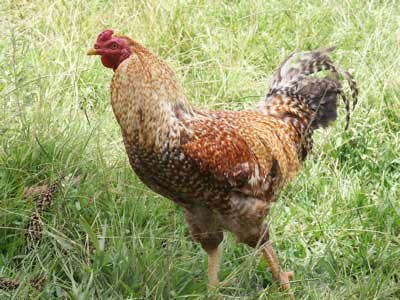
A healthy rooster in Minas, Brazil Photo credit: Sepp
Nutrition is important in forming the terrain and preventing illness
There are important nutrients, especially the mineral selenium, which determine the immune response of organisms to invading microbes and viral particles. Selenium has been identified as one of the factors in AIDS etiology by geo-epidemiologist Harold Foster. The mineral, or rather a lack of it, is also implicated in the appearance of avian influenza, says Qu Shaozhong in a comment posted to an earlier article on this site.
Selenium supplementation for fowl is recommended where the feed grains themselves do not contain a sufficient amount of this important mineral. A novel form of delivery - nano selenium - decreases the toxicity the mineral shows at high doses by a factor of 7.
The discussion of Qu Shaozhong, somewhat edited for better readability, is highly interesting as it shows a way of increasing resistance to the avian influenza virus in the affected bird populations as well as in humans by such simple means as the nutritional supplementation of selenium.
- - -
Avian influenza’s “internal factor" of selenium deficiency and an epidemic prevention strategy of "treating the cause”
Qu Yuan Qu Lai Qu Shaozhong
The spread of avian influenza all over the world can not be explained by external factors alone. According to dialectics, the internal factor is the basis and the external is the condition. The external factor can only act through the internal factor. What is the internal factor of avian influenza? Study shows that the internal factor of avian influenza is the consumption of selenium —the only element that has direct relation with viruses in the body of birds - in the peak period (autumn, winter and spring) of egg laying, which causes body imbalance and susceptibility to virus attack.
Let us examine the fact that the selenium composition in eggs is very high, with goose egg containing 336 mg/kg, duck egg 307 mg/kg, all reaching the selenium rich standard (280 mg/kg). The selenium composition of hen’s egg is 223 mg/kg, approaching selenium rich standard, and exceeding by far the selenium content of flour (47 mg/kg), rice (70 mg/kg) and beef (43 mg/kg). It can be said that birds are providing high selenium nurture to humans. However, the sources of selenium nurture for birds are not so good.
Taking chicken as an example, a hen can lay eggs 15-18 kg, and the egg/forage ratio should be between 2.6 and 2.8:1. If the selenium composition of egg can reach 233mg/kg, the selenium composition of forage should be 83mk/kg. (not including that consumed by chickens in their life and activity). But in some countries and regions deficient in selenium, it is difficult to reach this level (because the selenium in the soil is provided to animals through plants, and if soil is lacking selenium, feed grains are of course lacking selenium).
When income falls short of expenditure, e.g. high production of egg and low intake of selenium, the bird organism will lose its balance. As selenium is an important element needed by immune system, extreme lack of selenium will increase the possibility of being infected with avian influenza. This can be analyzed from macroscopic and microscopic view.
1. As seen from macroscopic view, the spread of avian influenza over the world is related to selenium deficiency
Fact: over 40 countries and regions are lacking selenium, including Europe, the USA, Canada, Asia and Southeast Asia. China is seriously deficient in selenium.
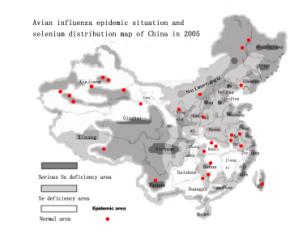
On the selenium distribution map of China, one can see a large selenium deficiency band running from the Northeast to the Southwest composed of 45 parts of provinces and municipalities. In addition, other areas are also short of selenium. There is only one third of the territory of our country where the soil reaches the normal critical value of 0.1mg/kg published internationally in terms of selenium composition and the remaining two thirds are selenium deficient area. The area with serious lack of selenium, (≤0.02mg/kg) accounts for 29% .
As bird forage is inexpensive, the materials of forage are usually taken from local resources, and the selenium in the food chain determines the selenium intake of local birds. Serious lack of selenium and high production of egg make hens lose their internal balance and cause a serious decline of resistance. The break-out and spread of avian influenza have coincides with these areas, and each time, this can be confirmed on the selenium distribution map of china. (See Fig. 1)
Figure 1: Avian influenza epidemic situation and selenium distribution map in China
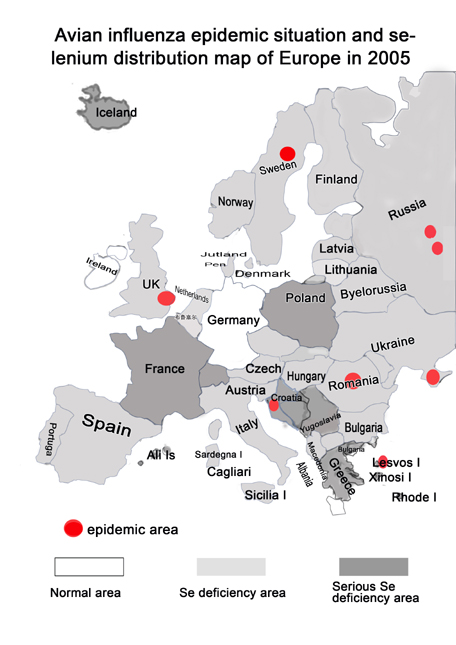
Ass seen from the history of avian influenza, it broke out in Italy, a selenium deficiency country in Europe, followed by Spain, Russia and Holland, which are also lacking selenium. The earliest, largest and most widespread five incidences of avian influenza all broke out in selenium deficiency areas, and the areas where we see avian influenza in 2005 are also short of selenium (See Fig 2).
Figure 2: Avian influenza and selenium distribution in Europe
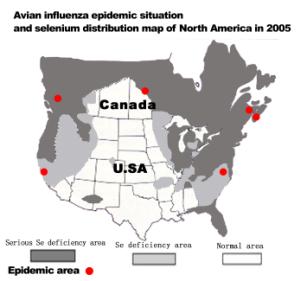
The United States of America and Canada have also conducted surveys on the selenium contents of their soil, and it can be seen from the North America selenium distribution map that the epidemic situation of avian influenza in 2005 also corresponds to the areas of selenium deficiency (see Fig.3). As reported, Southeast Asia is also recognized as a selenium deficiency area. However, its selenium distribution map can not be drawn here because detailed selenium composition surveys are not available.
Figure 3: North America - avian influenza and selenium distribution
It happens that there was a similar case of large scale occurrence of disease caused to humans by lack of selenium. This was keshan disease, an endemic disease caused by the lack of selenium in the early days of the foundation of our country. Its was manifested as cough, oppressed feeling in chest, difficult breathing, generalized hydrops (edema), pulmonary edema, heart failure and finally led to death. Researchers found Coxsackie’s virus in the heart of the dead, and the question was, why had this normally benign virus turned malign? Further research showed that it was because of selenium deficiency.Premier (Zhou EnLai) made a prompt decision to supplement selenium for 9,000,000 people in 310 areas of over 10 provinces, and the disease was controlled. This was a miracle of worldwide import. When avian influenza viruses attack once again, we should pay attention to the macroscopic relation between the disease and selenium deficiency.
2. The relation between selenium and avian influenza viruses as seen from a microscopic viewAs seen from a microscopic view, avian influenza virus is bacilliform or spherical in shape. The spherical virus has a diameter of 80-120nm and is covered by cyst membranes. The hemagglutinin of the outer cyst membrane is labeled with “H”, and according to different protein antigens, is marked with “H1-H5”, while its neuramidinase is labeled with “N”, or “NB1-N9”. The combination H5N1 denotes a highly pathogenic virus. What is the relationship between virus and selenium? It can be described directly and indirectly.
2.1 Direct relation between selenium and virus
The delicate relation between selenium and virus is determined by the characteristics of selenium. Selenium is either a beneficial element essential to the reproduction of living beings or a harmful element with toxicity, and the threshold between the two is very narrow.
The highest concentration of selenium is found in the semen and ovum of animals. Each sperm contains selenium and each time hundreds of millions of sperms are discharged. In the period of peak sexual activity, in the age between 20 to 40 for humans, and in the peak egg production period for birds, the need for selenium is the highest, leading to serious shortage of selenium in the body. This is determined in genetic breeding instructions. As the main task of genes is to reproduce, the genes keep most selenium in the spermaduct or Fallopian tube to be used for reproduction. Likewise, birds also store selenium in their eggs according to genetic instruction to meet the requirements of reproduction. This is why the concentration of selenium is highest in eggs.
The reproduction of viruses also needs selenium (and much more is needed because of the large number of viruses). The selenium needed by a single virus is very little, and if enough selenium is available in the organism of animals, the virus that enters the body will die because of overdose (toxicosis) of nutrition (selenium), in other words, it will poison itself. This is a typical instance of “combating poison with poison”, and also a modus of defense typefied by the phrase “with true Qi preserved, no disease will happen”.
On the contrary, when selenium is lacking in the body, it is easiest for viruses to invade, because they can get adequate dosage of selenium. In addition, mutation of viruses always happens in a selenium deficient environment, one that is most suitable to the reproduction of viruses.
Experiment shows that a sufficient supply of micromolecule selenium compounds can restrain HIV outside of the organism and inorganic selenium compounds can restrain cow leucovirus outside of the organism. Therefore, Chen Junshi, a nutritionist in our country has pointed out that “Selenium is the only nutritional element that has direct relation with viral infection”.
2.2 Indirect relation between selenium and viruses
Recently, there have been many reports about the indirect role of selenium on viruses, and the most outstanding is that supplementation of selenium can increase the number and activity of NK cells (natural killer cells). NK cells, as the most primitive and most instinctive immune and killing cells, are a specific type of T cell, and have a strong immune and killing capacity for all microorganisms (including all kinds of viruses) and variant cells. Experiment shows that the killing capacity of NK cells is 6 to 20 times that of other immune cells.
People paying attention to biological processes are eagerly awaiting the appearance of new products that can increase NK cells. Using selenium rich nano-tea, we achieved an increase of the number of NK cells by 20 to 100%, especially with the use of selenium rich nano-white tea. The method is also effective in increasing the vitality of NK cells, showing that the activity of NK cells has a close relation with selenium status.
Other indirect effects of selenium are mainly to increase immune capacity and strengthen the defenses of birds against viruses. Supplementing selenium can significantly increase multinuclear leucocyte’s phagocytic capacity, the number of leucocytes, lymphocytes and neutrophil cells in the blood and the formation rate of E-rose wreath(?). All these are indirect effects of selenium which increase the immune function and anti-virus capacity of birds, and are of similar significance. For example, in Qidong county Jiangsu Province, a high prevalence area of hepatitis B and liver cancer, the incidence of the two diseases has been significantly reduced through a large-scale selenium supplementation experiment.3. Nano-tech is a key factor in conquering avian influenza
Seeing that so much selenium is needed in defense against viruses, why is selenium supplementation not more widespread?
This is partly due to the characteristics of selenium. Because the safe application range of selenium is very narrow and its dosage is very small in absolute terms, there is a danger of excessive use if not stirred evenly. In order to solve this problem, our country has first invented nano-selenium, the most significant advantage of which is lower toxicity and thus higher safety compared with other selenium compounds. This is without doubt very important for the popularization of selenium supplements.
The acute toxicity of nano-selenium is 7 times lower than that of inorganic selenium and 3 times lower than that of organic selenium. This is a large range of reduction because the gap between normal selenium intake and selenium deficiency in animals usually doesn’t exceed one time. The error of fodder stirring usually doesn’t exceed 2 times, and so the 3-7 times reduction of toxicity of nano-selenium will give us a safety guarantee for selenium supplementation.
After preparation, nano-selenium forms a hollow structure and has the effect of adsorbing and killing viruses and it has been called a trap for viruses. It is preferable to prepare the selenium in particles of between 30 and 130 nm, which is equal to the size of viruses.
Three methods are available for the industrial preparation of nano-selenium
Zero valence metal nano-selenium is prepared through reduction and modification of selenium, such as “Xiwang” produced by Shanghai Sitong Nano.Another method is to reduce inorganic selenium added with vitamin-C to nano-selenium, which is very simple in operation.
The third are organic selenium nano-products, which are prepared by crushing selenium rich plants into nano-powder and can be entirely absorbed.
The conditions for industrial production of selenium rich nano-tea products are available in Qinhuangdao, Hebei Province. In Enshi of Hubei Province, Ziyang of Shanxi province, Fenggang of Guizhou Province and east Chongqing, the soil is the richest in selenium in China, and even in the world. Selenium in the soil can be converted by plants into organic selenium, which is highly bioavailable. The tea and other plants growing there contain a lot of selenium, especially in the winter. They can be cut, crushed and added into fodder, both safely and effectively, with a very small cost. In this way, the problem of the high cost of adding organic selenium into fodder can be solved.
The dosage of traditional selenium and nano-selenium added to the fodder of birds (calculated as per actual composition of selenium) is 0.2mg/kg to 0.4mg/kg during the growing period, 0.5mg/kg in the egg laying period and 0.8mg/kg as an anti-infection measure respectively. It can be seen that the selenium needed to increase immune function is much more than that required during the growing and egg laying period for birds.
As for the method of addition, the selenium preparation should first be crushed and added into pre-mixed materials, and then after stirred, added in proportion into daily fodder. The fodder can be given only after stirred evenly.
4. “Strategy of treating the cause” in the scientific treatment of avian influenza4.1 Humans have paid a high price each time when exploitation was excessive, such as the destruction of the selenium ecology in the environment by high levels of sulfur dioxide due to acid rain generated by industrial pollution; the outbreak of “Atypia” caused by greedily eating game; the excessive forcing of birds' productivity (more than 10 methods including increasing illumination time to increase egg output by 3.4 times from 7.95 million tons in 1990 to 27 million tons in 2004 in our country), making birds lose their environmental selenium balance and finally leading to the outbreak of avian influenza. This situation has also endangered humans, and we have to employ a tremendous amount of manpower and material resources to catch and kill a great number of birds. Up to now, about 140 million birds have been killed, resulting in a direct loss of over 3000 (3 million?) US dollars. If human avian influenza breaks out, the cost is estimated to be 800 billion.
China is a large selenium deficiency country. Selenium supplementation of such a large scope can become a widespread practice only based on a macroscopic study. For example, the present selenium distribution map was drawn up in 1980. Since then, 25 years have passed, and our country has witnessed high-speed development, with the selenium level in the food chain having been greatly influenced by serious industrial pollution and the discharge of large amounts of sulfur dioxide. This situation will make selenium availability and utilization decline greatly. For example, the intake of selenium of the English has declined by a full half in 20 years and England is now also becoming a selenium deficiency country.
Our country was originally short of selenium, and with tremendous social changes for 25 years, selenium has been greatly expended. We should now survey our resources and prepare a new selenium distribution map for our country.
4.2 We should adhere to the principle of treating both the principal and secondary aspects of the disease.
On the one hand, we should treat the principal aspect by providing supplemental selenium to the people and birds urgently needing supplementation, and on the other hand, we should dramatically change the selenium composition of the soil by adopting selenium rich fertilizer, letting plants absorb and convert much more organic selenium and increase the selenium content in food for humans and birds to a higher level and eventually up to the standard of 200 mcg selenium daily for each person as proposed by WHO.
A survey of 13 provinces and cities shows that the average intake of selenium for each adult in our country is 26-32 mcg/day, equivalent only to half of 50 mcg/day proposed as a minimum by WHO. It can be thought, therefore, the intake of birds in our country is also very low.Of course, it will be futile to apply selenium fertilizer if the discharge of sulfur dioxide is not effectively controlled, because it will make the plants unable to absorb the fertilizer. Therefore, it is of great importance to control and reduce industrial pollution.
Finland has been successful in this aspect, That country was seriously short of selenium. When it was found that its incidence and mortality of heart disease were significantly higher than that of high selenium countries and regions, the country promulgated a law to add selenium to soil that produces crop, fodder and grass. The measure has increased the intake of selenium for each Finn up to 90 mcg a day.
Chinese history shows how Premier Zhou led us to create a miracle in the world by conquering the kesha virus through supplementation of selenium. Now we have the capability to meet the threat from avian influenza. We should adhere to the principle of treating both the principal cause and secondary aspects of the disease and take appropriate action in selenium supplementation to increase our internal force and make avian influenza and other quick-variation viruses unable to prevail in our country, and finally create another miracle in the world.
The original of this article was found on www.369.com.cnSee also:
GEOGRAPHIC DISTRIBUTION OF GEOLOGICALLY BIOAVAILABLE SELENIUM: CORRELATIONS WITH HEALTH AND DISEASE
The Answer to the Threatened Avian Flu Pandemic May be Under our Nose
Sharry Edwards, pioneering researcher in bioacoustics, says vocal analysis could serve as a tool for early diagnosis of avian flu.From the Alternative Medicine Forum Yahoo Group:
More "Hype" ... gotta keep WHO happy that you're playing by their rules ... Hong Kong and Montreal/Toronto learned the hard way on last scam (SARS), which cost them $billions ... Check links ... are you scared yet? This is completely surreal and out of proportion to to the real world ... As someone said ... "Hey, I have an idea, let's make a vaccine for fear, then scare everybody" .... think of the benefits, both long and short term to pharmaceutical industry. Not to mention the smiling "population control guys." Regards, S
ps...Linked stories below indicate not Germany France/Italy/EU in total/Egypt/ India ... not one country ... can stand up to WHO pressure .... that's far more scary to me than "bird flu"...
EU ministers debate bird flu risk
Is bird flu a conspiracy?
Is there a link between Donald Rumsfeld and Gilead the company which invented Tamiflu and licensed it to Roche?The supplements - bird flu debate: selenium
2/27/2006 - Following last weekís claims and counter claims that dietary supplements may offer protection from avian flu, Stephen Daniells looks into statements that selenium supplements may offer protection. Many novel virus have been found in selenium deficient populations, with experts suggesting that relatively harmless viruses can mutate into deadly versions on passing through a selenium deficient host.Dietary Supplement Fact Sheet: Selenium
provided by the Office of Dietary Supplements • NIH Clinical Center • National Institutes of HealthKeeping selenium from insects could allow virus to infect them
Studies at USDA's Agricultural Research Service (ARS) in Columbia, Mo. indicate that viruses may affect insects that are short of selenium. The scientific community has known for some time that selenium is an essential micronutrient for people and animals. They've also just learned that insects also need selenium. "What we found is the insects that we tested needed selenium in order to resist viruses," said Kent Shelby, ARS research entomologist.New trading patterns blamed for selenium intake decline
... average intake of selenium in the UK has fallen from 60 to 34 micrograms per day. The European recommended daily intake (RDI) is 65 micrograms ... geographical studies ... have shown a consistent trend for populations with low selenium intakes to have higher cancer mortality rates. And a study carried out in France ... which followed a group of 1,389 elderly volunteers to for a period of nine years, found that those with low selenium diets were considerably more likely to die from cancer than those with high selenium diets.Selenium supplements may contribute to reduced HIV viral load
"The intervention resulted in no adverse events related to the study supplement," the authors write. The two groups had similar selenium levels at the beginning of the study, but after nine months of treatment, the average change in blood selenium level was greater in the treatment group. Higher blood selenium levels predicted a decreased HIV viral load, which in turn predicted increased CD4 count. "The exact mechanism by which selenium exerts its effects on HIV-1 viral replication is not known, although the literature suggests several possibilities," the authors write. One hypothesis holds that selenium's antioxidant properties may repair damage done to immune cells by oxygen, which is produced at higher levels in the bodies of patients with HIV. However, future research is needed to confirm this relationship.
posted by Sepp Hasslberger on Friday February 17 2006
updated on Monday November 29 2010URL of this article:
http://www.newmediaexplorer.org/sepp/2006/02/17/china_will_nano_selenium_help_prevent_avian_pandemic.htm
Related Articles'Bird Flu', SARS - Biowarfare or a Pandemic of Propaganda?
Are we being stampeded into a pandemic? The announcement was made by Dr Nancy Cox of the US Centers for Disease Control. According to an article in The Scotsman, Cox says that a global epidemic of bird flu could dwarf history’s worst infection disaster, which killed between 20 and 40 million people. The reference of course is to the "Spanish Flu" at the end of World War I which, according... [read more]
March 02, 2005 - Sepp HasslbergerBird Flu In Perspective - Public Fears Exaggerated
In an article on Lew Rockwell's site, Charley Reese comments on the excesses of propaganda we get dosed with daily about the epidemic or even pandemic that is - according to some of the government "experts" - inevitable. With 60 human deaths so far and no confirmed human-to-human transmission of the bird virus, there is really no cause for such exaggerated alarm. It seems that what is now called the... [read more]
October 19, 2005 - Sepp HasslbergerBird Flu Scare - 'Handsome Profit' For Rumsfeld
That the flu scare is a pharmaceutical cash-cow cannot really be disputed. Why can't I be surprised to read that Donald Rumsfeld, Bush II's Defense Secretary, already well known by the more health conscious among us for his role in approving deadly aspartame for human consumption, is implicated directly in this one as well? Dr Mercola has been the target of unpleasant legal attention by the aspartame makers for his... [read more]
October 20, 2005 - Sepp HasslbergerAvian Influenza: Are You Prepared?
U.S. and U.N. agencies and the Council on Foreign Relations are spreading the word that the Avian Influenza, if it breaks out this fall or winter, could be as severe as the worldwide Spanish Influenza epidemic of 1918, and they are predicting hundreds of millions of deaths worldwide. According to Jonathan Campbell, "this influenza, currently isolated in China, is a hemorrhagic illness. It kills half of its victims by rapidly... [read more]
October 08, 2005 - Sepp HasslbergerWill government experimentation cause an Avian Flu Epidemic?
A Bird Flu Vaccine trial currently underway in three U.S. cities has the potential to develop into a focus of spreading the disease. Jonathan Campbell reports. Will government experimentation cause an Avian Flu Epidemic? Avian flu outbreaks may no longer be confined to bird populations. Looks like that the bird flu is about to get a helping hand in jumping the species barrier... U.S. Team Will Test Live-Virus Bird Flu... [read more]
December 17, 2005 - Sepp HasslbergerAvian Flu - Is Specialization Killing Us?
Could specialization in medicine be keeping us from finding an effective way to prevent a potentially disastrous bird flu epidemic? Specialization in medicine - as in other branches of science and art - is an asset, but it also has its drawbacks. Invariably, specialized knowledge tends to develop where the money is, where grants and facilities are available. We have a myriad of experts analyzing the latest virus in great... [read more]
October 28, 2005 - Sepp Hasslberger


