Science 
The physical sciences have been stuck - for nearly a century - in a "preferred interpretation" of our universe and its workings. Although mathematically consistent to a reasonable degree, this interpretation of physical reality has little room for progress, for a better understanding of the reality around us and it is time we seriously look at alternatives that better explain our universe
January 05, 2014
Categories
After conducting "one of the most comprehensive risk assessments of aspartame ever undertaken", the European Food Safety Authority has released its verdict on 10 December 2013.

The agency came to the conclusion that aspartame and its breakdown products are "safe for human consumption at current levels of exposure".
The EFSA press release says that this was an important step forward in "strengthening consumer confidence in the scientific underpinning of the EU food safety system and the regulation of food additives".
So the message seems to be that we should all just move on to other things. Leave aspartame alone and better yet - drink some of that "diet" Coke.
But should we really?
Could perhaps the power of money and influence behind big food have had a determining effect on that decision? We cannot be certain what exactly caused the EU regulator to give aspartame a clean bill of health rather than to acknowledge the sweetener's widely known dangers. Fact is - they disregarded every single study that showed aspartame to have adverse effects.
Prof. Erik Millstone of the University of Sussex Science and Technology Policy Research Unit believes that EFSA has arrived at its conclusion by opportunistic interpretation of the studies that were reviewed. Most of the industry funded studies were given straight A's, while independent studies were - without exception - given an 'F' rating. Millstone says that
"The EFSA Panel opportunistically accepted at face value almost all of the studies suggesting that aspartame is harmless, while entirely discounting every single study indicating that aspartame may be harmful, even though the quality, power and sensitivity of many of the studies that were discounted were markedly superior to those of the contrary studies deemed reliable."
Continue reading "European Food Safety Authority cherry picks evidence - finds Aspartame completely safe"
posted by Sepp Hasslberger on Sunday January 5 2014
updated on Thursday January 26 2017
Permalink
| No comments
August 29, 2012
Categories
In this article, Beldeu Singh highlights some of the gross inconsistencies in our current approach to what is called the "AIDS epidemic".
There has never, to this date, been a proper isolation and purification of the human immunodeficiency virus, and one might be justified in saying that there is no AIDS epidemic, but rather an iatrogenic (doctor caused) epidemic of drug-induced deaths and a lot of unnecessary fear and suffering, all based on very wonky science... but it all seems to make excellent business sense, if you are a drug company shareholder or one of the thousands of researchers who work "to find a cure" for AIDS.

by Beldeu Singh
INTRODUCTION
In the early days neutropenia was one of the key parameters of AIDS. The clinical course of severe neutropenia, as described in the basic pathology textbook, “Pathologic Basis of Disease” by Robbins (5th Ed.), which is used in most medical schools to study pathology, describes what happens to people with severe neutropenia. The symptoms and signs of neutropenias are those of bacterial infections... Robbins also states, in italics, that "the most severe forms of neutropenias are produced by drugs." In severe agranulocytosis with virtual absence of neutrophils, "these infections may become so overwhelming as to cause death within a few days," (Robbins, p 631). This sounds disturbingly similar to a description of AIDS.
Dr. Michael Lange, associate chief of infectious diseases at St. Luke's-Roosevelt Hospital in New York and one of the doctors the FDA consulted when evaluating AZT in 1987, says even he sometimes had trouble differentiating between AZT's toxic effects and AIDS itself. An article in the New England Journal of Medicine describes the muscle wasting caused by AZT and compared it to muscle wasting, called "myopathy", presumed to be caused by HIV. Their comments in the abstract are shocking: "We conclude that long-term therapy with Zidovudine can cause a toxic mitochondrial myopathy, which... is indistinguishable from the myopathy associated with primary HIV infection..." So, there is drug-induced immune suppression and drug-induced AIDS, and AZT can cause AIDS. Yet 5000 scientists signed a declaration that HIV is the sole cause of AIDS. The AIDS industry is built on paradoxes and misguided beliefs.
Continue reading "AIDS – From Drugs to Vaccines "
posted by Sepp Hasslberger on Wednesday August 29 2012
updated on Thursday January 26 2017
Permalink
| Comments (1)
March 27, 2008
Categories
Psychiatry is looking for biological mechanisms to explain what it defines as "mental illness" to justify biological treatments, such as electroshock and mind bending pharmaceutical drugs. One of the more recent trends is to look for genes as a cause of aberrant behavior.
No such luck, says Vince Boehm, who maintains a specialized mailing list, in a recent communication. The search for a genetic cause is failing, according to author Dr Jay Joseph, and even psychiatry's own researchers admit as much. Here's what Vince says:
Well, I've got some horrible news for the true believers out there. Don't blame mom and dad.
Genetics is a cherished "article of faith" in mental illness theory. I've often wondered how this "bedrock of science" went unchallenged. After all, this search for simplistic answers to a complex problem has been going on for the past 100 years, for thousands of papers and books, actually, without coming up with any straight answers.
The genetics hypothesis has been used for decades by drug makers and their "grass roots"(AstroTurf®) advocacy groups to answer the inevitable causation problem. Causation is an unanswerable question. Blame heredity and just leave it at that. The state supported public mental health systems add the mantra of genetics to their litany of disinformation to enforce compliance.
This question bothered me until I met Dr. Jay Joseph in the fall of 2003 at the MindFreedom hunger strike.
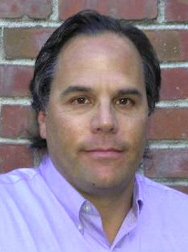
Dr. Jay Joseph
I was astounded. Up to that time, the hypothesis had gone unquestioned. It was considered to be unassailable scientific truth, with almost religious overtones.
Joseph exposed how the researchers had perverted science. He detailed the shenanigans that went on behind the scenes to justify the conclusions of the studies cited.
Surely one cannot deny that these things do "run in families". However the answer here cannot be purely genetics. One must consider the multitude of other factors that make up the human psyche. Socioeconomics, ideology, trauma, drug marketing, politics, cultural issues, and a desperate search for answers, any answers, all play a role. Environment is a much stronger argument than genes, per se.
Straight answers to even the simplest questions on this topic are hard to come by.
Dr. Joseph's second book on genetics, The Missing Gene: Psychiatry, Heredity, And the Fruitless Search for Genes (Paperback), rebuts the evidence cited in support of genetic theories. He shows that family, twin, and adoption studies are plagued by researcher bias, unsound methodology, and a reliance on unsupported theoretical assumptions. Basically, he reviews more than a century's worth of psuedoscientific flotsam and jetsam in this book.
An example is the famous "Danish Twins Study" (Kety). Seymour Kety was the first scientific director of the National Institute of Mental Health (NIMH). This study was terribly flawed, but still cited as Holy Grail proof that schizophrenia is hereditary.
Of the 18 Kety "schizophrenics" only one had a hospital diagnosis. The rest were "diagnosed" in a series of five minute door step interviews by a cadre of grad students. They had to expand their sample to paternal siblings to get their conclusion. (Joseph, Missing Gene).
Kety's fatal error was accepting "latent schizophrenia", or schizophrenia without psychosis, as a valid diagnosis of schizophrenia.
Merely having unusual notions, like a strong belief in a lucky number, or having a minority sexual orientation might earn a person a schizophrenia label in those days. While the latent schizophrenia concept was accepted when the work on Kety was done in the early `70s, latent schizophrenia was rejected by DSM-III in 1980.
So just 4 years after Kety was published, most of his "schizophrenics" weren't schizophrenic any more.
Today psychosis is a pre-requisite for a schizophrenia label. Fourteen of the eighteen alleged Kety "schizophrenics" were labeled as latent schizophrenics. The remaining four were distributed throughout one large, dysfunctional extended family. (Breggin). This, in itself, is a strong argument for environmental causes rather than pure genetics.
A note about scientific method
Scientific method is a body of techniques for investigating phenomena, acquiring new knowledge, or correcting and integrating previous knowledge. It is based on gathering observable, empirical and measurable evidence subject to specific principles of reasoning. A scientific method consists of the collection of data through observation and experimentation, and the formulation and testing of hypotheses.
Among other facets shared by the various fields of inquiry is the conviction that the process must be objective to reduce a biased interpretation of the results. Another basic expectation is to document, archive and share all data and methodology so it is available for careful scrutiny by other scientists, thereby allowing other researchers the opportunity to verify results by attempting to reproduce them.
Peer review, the mandate of scientists of equal status to assess, test, and either rebut or affirm any given hypothesis is the true life blood of the scientific method.
Peer review in this field is nonexistent. Replication of results not even considered. This funny business lends itself well to my Dodo Theory.
In Lewis Carroll's Alice's Adventures in Wonderland at a certain point in the proceedings a number of characters become wet. In order to dry themselves, the Dodo decided to issue a contest.

Everyone was to run around the lake until they were dry. Nobody cared to measure how far each person had run, nor how long.
When they asked the Dodo who had won, he thought long and hard and then said "Everybody. Everybody has won and all must have prizes."
Now, four leading psychiatric geneticists have made a startling admission.
Their 100 year effort has produced nothing but psuedoscientific gibberish.
From this editorial, this group is going high tech and embracing the Human Genome Project! You might consider buying a pair of hip boots. The doo-doo is gonna get very deep out here in a hell of a hurry!
"If you can't dazzle them with brilliance, baffle them with bullshit". (P.T. Barnum)
Vince
- - -
Jay Joseph writes:
I would like to quote from a 2007 article from a group of four leading psychiatric geneticists. They actually admit, after more than two (and in some cases three) decades of intense worldwide research, that they have found virtually nothing in the way of replicated gene findings for psychiatric disorders! They do claim that a "few" findings have been replicated, but fail to name them. In fact, I am not aware of any consistently replicated findings. Unfortunately, many leaders of this field feed stories to journalists about supposed gene findings, and these of course end up as sensationalized reports of "gene findings" that are actually never replicated. It's too bad that the sobering assessments these psychiatric genetic researchers share with their colleagues rarely make it into the popular media.
Here is the quote, from a 2007 article by psychiatric geneticists S.V. Faraone , J.W. Smoller, C.N. Pato, P. Sullivan, and M.T. Tsuang:
"It is no secret that our field has published thousands of candidate gene association studies but few replicated findings."
Jay Joseph, Psy.D.
Licensed Psychologist
The Missing Gene (2006), The Gene Illusion (2004)
www.jayjoseph.net
Continue reading "Neuropsychiatric Genetics fails to find cause of mental illness"
posted by Sepp Hasslberger on Thursday March 27 2008
updated on Friday June 26 2009
Permalink
| Comments (2)
February 01, 2008
Categories
A study by the World Health Organization's senior radiation advisor Dr Keith Baverstock, completed in 2001, suggested that the use of uranium weapons in Iraq could pose a unique health hazard to the civilian population. The publication of the study was suppressed by the World Health Organization's hierarchy and only in February 2004 the UK Sunday Herald broke that story.
Dr Baverstock was quoted as saying: “I believe our study was censored and suppressed by the WHO because they didn’t like its conclusions. Previous experience suggests that WHO officials were bowing to pressure from the IAEA, whose remit is to promote nuclear power. That is more than unfortunate, as publishing the study would have helped forewarn the authorities of the risks of using DU weapons in Iraq.”
At the time, the WHO's Dr Repacholi, a corrupt scientist known for his role in hiding any damaging effects of mobile phone radiation on humans and animals, denied that there had been any interference with the report, saying “The IAEA role was very minor,” but the study titled Radiological toxicity of DU which could have saved countless lives in the Middle East, had indeed never been published.
And of course the damage that is being done by depleted uranium munitions and missiles coated with the radioactive metal can hardly be overlooked any more:
Use of "Depleted" Uranium Munitions
Daytona Beach News-Journal Special
DEPLETED URANIUM BURNING: AN E T E R N A L MEDICAL DISASTER

Fast forward to December 2007: Health professionals are CALLING FOR INDEPENDENCE OF THE WORLD HEALTH ORGANIZATION.
Their letter to Madam Chan, Director-General of the WHO, makes reference to another case of suppression of scientific data, nuclear contamination after the disastrous accident at the Chernobyl reactor, and the consequent endangerment of human life without adequate intervention. The appeal spells out what is wrong and asks that the World Health Organization rescind its link with the International Atomic Energy Agency and fulfill its stated purpose of protecting human health:
Continue reading "World Health Organization 'Paralyzed by Nuclear Lobby'"
posted by Sepp Hasslberger on Friday February 1 2008
updated on Thursday June 25 2009
Permalink
| Comments (1)
European Food Safety Authority cherry picks evidence - finds Aspartame completely safe
January 05, 2014
AIDS – From Drugs to Vaccines
August 29, 2012
Neuropsychiatric Genetics fails to find cause of mental illness
March 27, 2008
World Health Organization 'Paralyzed by Nuclear Lobby'
February 01, 2008
What Really Killed the Dinosaurs?
December 13, 2007
'Biofuels' Hard Choice: Want Food or Fuel?
December 14, 2006
Will Nature, Science Allow Aids Discussion?
June 23, 2006
Chemical Poisoning: Brave New World of Zero Risk
December 22, 2005
Will Hydrinos Replace Oil As Power Source?
November 05, 2005
Corrupted Research: Most Scientific Findings Are False
September 16, 2005
Energy: Are Oil And Natural Gas Renewable?
September 02, 2005
GM Food Safety: Royal Society Suppressed Study
August 10, 2005
Life And Gravity: Sleeping In A Horizontal Position May Be Bad For You
August 07, 2005
Where Are The Bodies? - The Exceptional Safety of Nutritional Supplements
May 17, 2005
Exopolitics - Why Are Extraterrestrial Politics Taboo?
April 10, 2005
Court: Second Hand Smoke Agenda Driven - Case For Independent Science
April 02, 2005
The Myth Of Dark Matter - Can Science Change?
March 09, 2005
Cooperative Space Exploration - Linking up with NASA
February 28, 2005
Science Commons: Open The Flow Of Scientific Information
February 21, 2005
New Physics: Debating Einstein, Matter, Time and Space
December 11, 2004
Umbilical Cord Stem Cell Therapy Successful: Paralysed Patient Walks After 19 Years
November 29, 2004
Beyond Einstein's Relativity: Cosmology Dissident Says Big Bang Absurd
November 27, 2004
Schubert: 'Sound Science' Overrides Reality and Common Sense
July 18, 2004
Space Vortex Theory: Einstein and Tewari's 'Cartesian Universe'
May 13, 2004
Gene Mallove: Science Censorship is 'Invisible Evil'
April 30, 2004
Kohei Minato and the Japan Magnetic Fan Company
April 05, 2004
Time, Reality and an Experience of Death
April 03, 2004
Swedish Science Dissident Proposes New View of Red Shift, Global Warming
March 20, 2004
Antarctic Time Warp Discovery
March 02, 2004
Physics - A Unified View
February 19, 2004
Peer Review - Politics of Science?
January 29, 2004
Emergence - a Holistic Theory of Physics
January 16, 2004
Nanotubes, Nanoshells, what are the consequences?
November 29, 2003
Physics and ultimate cause
November 15, 2003
A Universe of Scale - Stars edge closer
September 21, 2003
Dutchman predicts scientific revolution
September 18, 2003
Health Supreme's RSS News Feeds
Subscribe to Health Supreme's "Science" News Feed
Subscribe to Health Supreme's RSS News Feed
|
|
|

This work is licensed under a Creative Commons License.
These articles are brought to you strictly for educational and informational purposes. Be sure to consult your health practitioner of choice before utilizing any of the information to cure or mitigate disease. Any copyrighted material cited is used strictly in a non commercial way and in accordance with the "fair use" doctrine.
|