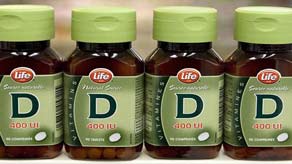


Vitamin A and D - Synergy and Balance
There has been an unusual spate of studies in recent times about Vitamin D and the protective effects it is said to have against various illnesses. I have linked those articles in newsgrabs, and published one or two of them myself. Here is a selection of some of this year's articles:
Boning up on the sunshine vitamin
Get some sun: Risk of Dying Linked to Low Vitamin D
Lack of vitamin D rampant in infants, teens
Adults still risk vitamin D deficiency
Study links vitamin D to colon cancer survival
Get a Little Sun This Summer – It Could Help Save Your Life
Vitamin D: New way to treat heart failure?
Study links vitamin D, type 1 diabetes
Low blood levels of vitamin D linked to depression
Vitamin D linked to reduced mortality rate in kidney disease
Vitamin D necessary for proper brain function
Vitamin D 'cuts risk of diabetes'
Low vitamin D heart health risk
In a general environment where vitamins and other nutrients are denigrated because they don't fit the pharmaceutical profit model, this series of good news is certainly an oddity. Reading those articles, it would seem there isn't an illness that vitamin D cannot be usefully influencing, preventing or curing.
While I am not saying vitamin D isn't a very useful nutrient, the question is why is someone promoting vitamin D in the teeth of a generally very anti-vitamin climate, and without a mention of its synergistic twin, vitamin A? There is even a dedicated organism, the Vitamin D Council, set up to promote the use of vitamin D. They cite a veritable epidemic of vitamin D deficiency and urge people to supplement:
Current research has implicated vitamin D deficiency as a major factor in the pathology of at least 17 varieties of cancer as well as heart disease, stroke, hypertension, autoimmune diseases, diabetes, depression, chronic pain, osteoarthritis, osteoporosis, muscle weakness, muscle wasting, birth defects, periodontal disease, and more.Vitamin D's influence on key biological functions vital to one's health and well-being mandates that vitamin D no longer be ignored by the health care industry nor by individuals striving to achieve and maintain a greater state of health. If one regularly avoids sunlight exposure, research indicates a necessity to supplement with at least 5,000 units (IU) of vitamin D daily.
Could a synthetic (patentable) version of vitamin D be on its way to market? Has a pharmaceutical conglomerate decided it is time to get into the nutrients business? Maybe, but a recent article points in a different direction.
Vitamin D's wild days: Who to test, what to take?
Vitamin D and calcium go hand in hand. You need a lifetime of both to build strong bones. We get D in three ways: sun exposure, dietary supplements or certain foods, particularly D-fortified milk, orange juice and cereals.Fortified milk, orange juice and cereals ... hmmm - could there be an interest of big food industry in all those recent vitamin D studies to sell vitamin-D fortified wares? Personally, I prefer some sun once in a while and perhaps some D in supplements.However, we should also take note of a contrary voice in all this promotional hysteria which was highlighted in a recent comment on this and also on a later post on this site. The commenter links this paper - Vitamin D: the alternative hypothesis - which explains that the deficiency/disease hypothesis may be too simplistic in the case of vitamin D. The authors warn that in the long term, vitamin D supplementation may be damaging, although in the short term, its anti-inflammatory action will suppress symptoms of disease.
Sally Fallon of the Weston A. Price Foundation says that vitamin D is best taken together with vitamin A, and that one of the best sources of this combination is ... cod liver oil. She believes (and looking at all these articles, one cannot but agree) that vitamin D is being promoted while its companion vitamin gets the rap.
"Cod liver oil is a food; it can't be patented, it can't be created in a laboratory; it can't create millions for the drug companies."See what she has to say...
- - -
INFORMATION UPDATE on COD LIVER OIL
by Sally Fallon
President
Weston A. Price FoundationWe have recently received enquiries about several internet newsletters that have made disparaging remarks about cod liver oil. As the Weston A. Price Foundation recommends the use of cod liver oil as a nutrient-dense food, we thought it would be good to address the concerns that have been expressed, clarify our position and point out the science-based research that we have compiled on this subject.
Critics of cod liver oil have focused on three concerns:
1. Cod liver oil contains dangerous amounts of mercury and dioxins.
2. Cod liver oil contains dangerous amounts of vitamin A.
3. The vitamin A in cod liver oil interferes with the body's assimilation of vitamin D.
MERCURY AND DIOXINS IN COD LIVER OILCod liver oil is probably one of the cleanest foods in the food supply. All cod liver oil goes through a complete filtering process, and repeated testing has shown that the amounts of mercury and PCBs in cod liver oil are undetectable. See the following link for an article on cod liver oil processing: https://www.westonaprice.org/cod-liver-oil/171-2008-dec-clo-update1.html.
Even without modern processing, mercury in cod liver oil is not a concern because mercury accumulates in the protein portion of fish, not in the oil.
In addition, the vitamin A in cod liver oil is our best protection against dioxins. See our article on this subject at ... (no active link). To quote from the article,
". . . vitamin A appears to play a unique role in protecting against the toxicity of dioxins, and has some protective effects that other antioxidants do not have. A large part of vitamin A's protective role is attributable to its antioxidant effect."
VITAMIN A IN COD LIVER OILThe claim that vitamin A in cod liver oil is toxic just doesn't make sense in the context of traditional diets, which were very rich in vitamin A from liver, organ meats, seafood and the fats of grass-fed animals. The crux of Dr. Price's research is that the diets of healthy primitive peoples contain about ten times more vitamin A than modern diets. That is why we recommend cod liver oil as an excellent food source of vitamin A.
Over the years, the Weston A. Price Foundation has compiled extensive evidence showing that natural vitamin A in foods such as cod liver oil is not toxic EXCEPT in cases where vitamin D is deficient. That is why we recommend only certain brands of cod liver oil. It is important to AVOID cod liver oil that contains low levels of vitamin D in relationship to vitamin A; the ratio of A to D in cod liver oil should be at least 10 to 1 - unfortunately, in some commercial brands of cod liver oil the ratio is as low as 100 to 1.
The US Recommended Daily Allowance for vitamin A is far too low and has led to widespread suffering from vitamin A deficiency. It is ironic that one of the main critics of cod liver oil, who refers to the US RDA when he claims that vitamin A is toxic, has been working for years to dispel the notion that vitamin D is toxic and to convince the US government to raise the RDA for vitamin D.
VITAMIN A AND VITAMIN D INTERACTIONSThe articles cited above show that vitamins A and D work synergistically, not antagonistically; if you take large amounts of vitamin A without vitamin D, you are likely to develop symptoms of vitamin D deficiency. Likewise, if you take large amounts of vitamin D without vitamin A, you are likely to develop symptoms of vitamin A deficiency.
The critics of cod liver oil seem to have very little understanding of how these vitamins work together. In fairness, very little study has been done on the interaction of A and D, although there is enough to show that A and D work synergystically. Recent research from Spain indicates that vitamin A is necessary for both vitamin D binding and vitamin D release to receptor sites. We will be reporting on this work in an upcoming article in Wise Traditions.
Once again, it is important to realize that traditional diets were rich in both A and D and that A and D have a myriad of uses in the body. Traditional peoples always had plentiful amounts of both A and D in their diets.
THE COD LIVER OIL PUBLIC HEALTH INITIATIVEDuring the first half of the century, cod liver oil was the focus of a worldwide health initiative. Parents were urged to give cod liver oil to their children by doctors, by government officials, by teachers and principals in schools, and even by their ministers in churches. A large portion of adults in America born before the Second World War received cod liver oil as children and this practice contributed to a high level of health, intelligence and physical development in those lucky enough to receive it. In Europe in many countries, children received a daily ration of cod liver oil, especially during the war years. In the UK, for example, the government issued cod liver oil to all growing children until the early 1950s.
What has led to the demise of this obviously beneficial practice? Cod liver oil is a food; it can't be patented, it can't be created in a laboratory; it can't create millions for the drug companies. So interest in this wonderful superfood has naturally waned. But if you are basing your dietary habits on the principles of healthy nutritional diets, don't hesitate to include cod liver oil as a healthy and natural food source of critical vitamins so lacking in modern diets.
posted by Sepp Hasslberger on Wednesday July 23 2008
updated on Thursday November 18 2010URL of this article:
http://www.newmediaexplorer.org/sepp/2008/07/23/vitamin_a_and_d_synergy_and_balance.htm
Related ArticlesNatural Antibiotic: Vitamin D Fights Severe Infections
Vitamin D has to do with absorption of calcium into the bones - it will even take the mineral out of the soft tissues to do its building job, if not enough is around from foods we eat. But vitamin D as an antibiotic? It might seem somewhat far fetched but the evidence is hard to overlook, says Dr. John Cannell of the Vitamin D Council, described as "a group... [read more]
June 12, 2006 - Sepp HasslbergerNutrients Cure 'Mental Illness' - Orthomolecular Psychiatry
Orthomolecular medical researchers say the future of psychiatry is in nutrition because nutrition has such a long, safe and effective history of correcting many mental problems. Starting us out on a path of discovery and healing, the Orthomolecular Medicine News Service (www.orthomolecular.org) recommends a simple but abundant daily nutrition program that has been effective in making many of the symptoms of what is today called "mental illness" disappear without trace.... [read more]
November 07, 2005 - Sepp HasslbergerOvercoming Aids, Infections, Heart Disease: Vitamin C Is Key
Vitamin C may be a life-saver, wrote Jane Feinmann in a recent article in The Independent, one of the major papers in the UK. According to the article, in June 1949 when polio was at its peak. Dr Frederick Klenner, a clinical researcher from Reidsville, North Carolina, reported that a massive intravenous dose of Vitamin C - up to 20,000mg daily for three days (today's recommended daily allowance is 60mg)... [read more]
April 22, 2005 - Sepp HasslbergerSunshine, Vitamin D May Prevent Influenza
Vitamin D, or rather a lack of it, may have something to do with the regular flaring up of influenza in the winter months. A team of Harvard based researchers is "focusing on a provocative new hypothesis that blames annual flu epidemics on something most people don't get enough of this time of year: sunshine", reports the Baltimore Sun. In a paper scheduled for publication next month in the journal... [read more]
November 28, 2006 - Sepp HasslbergerLack of Vitamin D - The Real Reason Flu Hits In Winter
Further to Cold remedies that really work - update here is a great adjunct in addition to less Vitamin D, much fresh produce is reduced and additional supplementing with vitamin C is just as important. See: All Vitamin C/Common Cold Studies Conducted Over The Past 60 Years Are Flawed "In the July 2005 FASEB Journal, Adrian F. Gombart of the University of California, Los Angeles (UCLA) and his colleagues reported... [read more]
December 14, 2006 - Chris GuptaVitamin A saving countless lives
In these times of pharmaceutically inspired attacks against food supplements, it is good to remember some of the positive information about vitamins. For instance Vitamin A is known to save hundreds of thousands of lives in developing countries, as reported by the John Hopkins Bloomberg School of Public Health "The most recent studies by Dr. Sommer and his colleagues have shown that supplementing women of childbearing age with vitamin A... [read more]
June 18, 2003 - Sepp Hasslberger
3152
 |
|
|
|
|
|
 |
|
||||
|
|
|||||
|
|
||||