

'Guinea Pig Kids' - BBC Video Raises Aids Lobby's Heckles
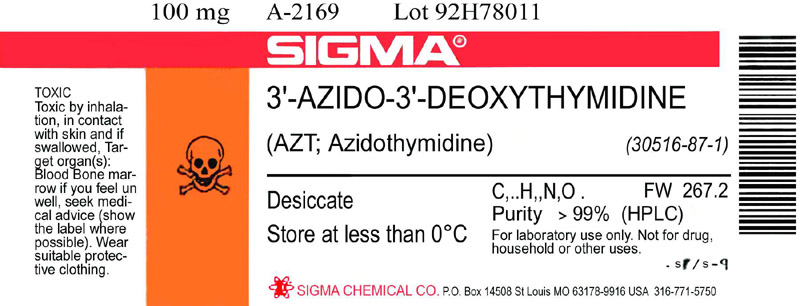
In the summer of 2004, Liam Scheff, an independent investigative journalist published the story of Incarnation Children's Center in New York, where experimental and highly toxic Aids drugs were forcibly administered to foster children of the State. Originally published in the article The House That Aids Built, the story was subsequently carried by The New York Press with the title: Orphans on Trial.
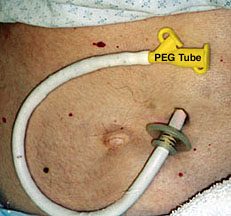
Children refusing medication were surgically implanted a tube to allow direct injection of drugs into the stomach - Image: Altheal.org
In November that same year, the BBC broadcast a video on the Incarnation story: Guinea Pig Kids. The video is available from this page, and here is a transcript (PDF). Nevertheless, in what appears to be an attempt to censor unwelcome information, some Aids treatment activists have now filed a complaint against the BBC, asking that the film be purged from the broadcaster's archives and any reference to it be removed from their website. The complaint is summed up by Chitra Bharucha, acting Chair of the BBC Trust as follows:"The inflammatory film and companion written piece on the BBC website misrepresented as "human experimentation" on vulnerable children of color what were in fact crucial and successful efforts to make lifesaving treatments available to desperately ill foster children with AIDS through compassionate use of clinical trials of HIV drugs already approved for adults. Although the film was broadcast over two years ago, an article about it on the BBC website and the video, circulated by HIV denialists, continue to spread false and dangerous ideas about AIDS, antiretroviral treatments, the care provided to children at Incarnation Children's Center, and the importance of making lifesaving medications available to desperately ill children regardless of their family circumstances. The legitimacy accorded these erroneous ideas by the authority of the BBC facilitates the spread of disinformation, which in turn undermines prevention efforts and impedes treatment access, both by individuals and as government policy."The whole text of the complaint can be accessed here.
Those complaining are advocates of the failed all-pharmaceutical solution to Aids. In their attempt to brow-beat the BBC into submission, they self-righteously conclude their missive with the words:
"The film's researchers Celia Farber and Liam Scheff as well as Christine Maggiore and David Rasnick who appear in the film, reject the solid scientific evidence that the virus known as HIV is the cause of the complex immune system breakdown known as AIDS, and that without treatment - the very treatment the children in ICC received through clinical trials - almost all HIV-infected people will die of illnesses related to the disease. None of them have any standing in the scientific community. Consequently, Doran [the BBC film-maker] defamed several institutions doing competent and important work. Doran's documentary is ignorant of the ethics of clinical trials, the role of state institutions who look after children and the science of HIV.We call on the BBC to rectify immediately this betrayal of the public trust by taking the steps outlined above. Please respond at the earliest opportunity."
The problem here is that there's a cat struggling to get out of the bag. As a matter of fact, it may already have escaped ... and it won't be easy to put the screaming beast back in there. The information on the scandal that is Aids is out. It's all over the net, and the shameful censorship that the mainstream media can be subjected to may well work on the BBC, but it won't work with an army of individuals who have smelled the fresh air and who have seen, each one of us individually, a glimpse of the truth.
- - -
The great pharmaceutical business around Aids may well be on its way out. Retroviral drugs ARE damaging, and according to critics, they could be the major cause of death in Aids. Nutrition IS important for good health. That goes especially for those suffering from a stressed immune system. The tests for HIV are not reliable and indeed the HIVirus itself has never been properly isolated ... tests are finding stressed protein fractions that are not specific to any virus.
But as Liam Scheff rightly says, it might not even be a bad thing if BBC took the step to appease Aids Inc. and removed the film.
"... because as long as they scream:
"These drugs are great and everybody shut up, and the tests work, and anybody who says otherwise is a Denialist and a Liar!!"Well, then, the court of public opinion is opened a crack, and I'm sure all of those (who do this work) are more than pleased to let the lights shine hard and freaking bright on the actual data, on what is actually known about the drugs, the tests, etc.
So, take it down, BBC, and let the actual debating really begin."
I tend to agree. What we need is an open discussion of the scientific merits of how we treat those unfortunate people who "test positive" to "antibodies" of a virus that can't be found. The wisdom of giving highly toxic medications to millions of Africans and to thousands of "high risk" (poor, black, hispanic, gay) individuals in the developed countries needs to be questioned and discussed. Aids is one of the greatest scientific scandals of the twentieth century - a scandal that should not survive in its present form in the century that just began.
Doubtful? Don't take my word for it - start your own research ... get past the propaganda of drugs - drugs - drugs and look, as I have, at the inconsistencies behind the scenes. You'll be appalled.
Some good sites to start your journey:
http://www.virusmyth.net/aids/
There are also quite a number of articles on this site, some of which are listed below. Others can be located searching HIV or AIDS in the google search window you find at the top of this page.
See also:
The ICC Investigation – Deaths in Studies with NYC Orphans – AHRP on the VERA Institute Report
The final report of the VERA Institute investigation commissioned in 2005 by the NYC Administration of Child Services will hardly put to rest the controversy surrounding a 20-year period during which children in foster care were subjected to toxic Phase I and Phase II AIDS drug and vaccine experiments–mostly without parental consent and without the protection of an independent advocate–as mandated by federal regulations in force then and now.ICC Interview
In May 2003, I began my investigation of the Incarnation Children's Center (ICC), an orphanage in New York City's Washington Heights that was being used by government (N.I.H.) and pharmaceutical companies as a test center for the standard AIDS drugs – AZT and its analogues, Nevirapine, and the various protease inhibitors. ICC received funding from both government and corporate sponsors to enroll its wards, primarily abandoned children of drug (crack cocaine and heroin) abusers, in NIH clinical trials. What follows in this series are five excerpts of my October, 2003 interview with ICC's medical director Dr. Katherine Painter. In the interview, Dr. Painter provides information about:
1. Who gets into ICC and why.
2. The backdoor through which ICC's wards were used in government/pharma-sponsored Clinical Trials.
3. The measures taken to enforce 'adherence' to the drug regimen.
4. And a hint of the toxicity of the drugs (ie. their ability to "suppress" bone marrow and cause anemia).
On a personal note, I found it very uncomfortable to talk with the doctor, and to listen to her, as she seemed totally removed from what she was saying; dissociated, in a real sense; inured against the horror of what she was describing, of what she was participating in. Three and a half years later, I still find it almost impossible listen to.The ICC Investigation – Thalidomide for Black Orphans
Thalidomide, the once-banned sleep-aid that caused a wave of severe and deadly birth defects in the late 1950s and early 1960s, has been reintroduced into the AIDS market (1), and was specifically used on at least one ICC resident in 2003-2004. I was told the story of a boy named Seon by child-care workers, nurses, former child residents and guardians of children in ICC. Seon was being dosed with many drugs at once through a gastric-tube into his stomach, because, I was told, he failed to adhere to his regimen...The AIDS Investigation by Liam Scheff
In 2004, I broke open the NIH clinical trial scandal - government researchers using New York City orphans in clinical trials with combinations of highly toxic, speculative drugs.
posted by Sepp Hasslberger on Friday January 26 2007
updated on Thursday December 16 2010URL of this article:
http://www.newmediaexplorer.org/sepp/2007/01/26/guinea_pig_kids_bbc_video_raises_aids_lobbys_heckles.htm
Related ArticlesWill Nature, Science Allow Aids Discussion?
Darin Brown, initiator of the Aids Wiki is asking a very interesting question: Why is it that scientific media refuse to allow discussion of the different scientific views that exist on the etiology and the best treatment modes of Aids? In the article, titled Who Are the Real AIDS Denialists? – Testing the 'Moore Assertion' Brown cites Prof. John P. Moore, self-appointed "Major General in the War on AIDS" and... [read more]
June 23, 2006 - Sepp HasslbergerSAM-e: Methylating Agent Stops Depression, HIV
In two recent articles based on research done by Cal Crilly, methylation of the DNA is indicated as a mechanism that controls the expression of what we call "retrovirus" particles. These are parts of the human DNA that are mobile and that often have benign functions in our body processes. See AIDS - Retrovirus Expression Regulated by Methylation? and Why Retroviruses Appear in AIDS, Cancer and Autoimmune Diseases. The retrovirus... [read more]
June 11, 2006 - Sepp HasslbergerWhy Retroviruses Appear in AIDS, Cancer and Autoimmune Diseases
Cal Crilly, who recently wrote AIDS - Retrovirus Expression Regulated by Methylation? published on this site, has now expanded on his research. The new article, which puts many an official researcher to shame, delves into important questions such as "what is a retrovirus" and "why do pregnant women generally test positive for HIV". Fintan Dunne, who has done the editing of the article and published it on his site, says... [read more]
May 30, 2006 - Sepp HasslbergerHIV Test Bogus - Based on Circular Reasoning
HIV tests are are not only unreliable - they have been tweaked to respond to protein fractions found most often in those people that are part of AIDS "risk groups", says Neville Hodgkinson, author of AIDS: The Failure of Contemporary Science in his latest article published last Sunday (21 May 2006) in The Business. One story Hodgkinson relates in his thoughtful article is how the symbol of HIV infection -... [read more]
May 23, 2006 - Sepp HasslbergerWhy I Quit HIV - Is AIDS Myth Falling Apart?
A Canadian mathematical biologist working as an Assistant Professor of Mathematics at University of Texas at Tyler, who has lived and breathed the theory of Aids and HIV infection for practically all of her professional life, has announced that she "quit HIV". Click for larger image Cartoon by Emma Holister There are a number of reasons for Rebecca Culshaw's decision - none of them should be a surprise to regulars... [read more]
May 03, 2006 - Sepp HasslbergerGlutathione Peroxidase - Selenium, Aminoacids Overcome AIDS
According to the Orthomolecular Medicine News Service "new clinical reports from Zambia, Uganda and South Africa indicate that AIDS may be stopped by nutritional supplementation. A number of members of the medical profession have observed that high doses of the trace element selenium, and of the amino acids cysteine, tryptophan, and glutamine can together rapidly reverse the symptoms of AIDS, as predicted by Dr. Harold D. Foster's nutritional hypothesis." Yet,... [read more]
April 26, 2006 - Sepp Hasslberger