




Lipitor Neurological Side Effect: Amyotrophic Lateral Sclerosis, Alzheimer's
Lipitor and other statin drugs are well known for their degradation of muscle tissues and the sometimes excruciating pain that comes with this. What is less well known is that the progression of this muscle wasting side effect may lead to a diagnosis of amyotrophic lateral sclerosis (ALS), also called Lou Gehrig's disease or motor neurone disease, described as a chronic, progressive, almost invariably fatal neurological disease.
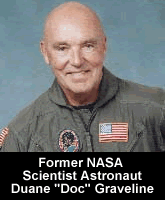
Duane 'Spacedoc' Graveline, author of Statin Drugs Side Effects: the misguided war on cholesterol
Statins are the absolute best sellers in the pharmaceutical armamentarium against "high cholesterol" which in itself is not a disease but has been heavily promoted as an indication of future cardiovascular trouble.
The use of these drugs is associated with serious side effects, most prominent is a degeneration of the muscular tissue and debilitating pain that comes with it. If you have any doubt whatsoever about this, please read two earlier articles on this site:
and
Lipitor: Side Effects And Natural Remedy
Quite apart from the damning information in the articles themselves, you will see that literally hundreds of readers have added accounts of their personal experiences of the side effects of the statin drugs they are taking.
This can no longer be put this down to lack of information about the effects of these drugs. The pharmaceutical producers are hooked on the billions they are making and are doing everything possible to make the FDA and other regulatory agencies look the other way. Doctors are largely being kept in the dark as well. Perhaps you can help to bring the carnage to an end by copying this article plus the two earlier ones and making your doctor pay attention. There is little hope that the FDA or any other regulatory agency will act as long as the pharma manufacturers say that "everything's ok". We need a doctors' revolt.
But let's take a closer look now at nerve degeneration as a possible statin side effect. Duane Graveline, who is a former NASA scientist and astronaut as well as a medical doctor, has an explanation for the neurological effects of statins and it's not just theoretical. He has encountered many cases that suggest this is really happening.
Read his report here, including several accounts of ALS patients:
- - -
ALS AND STATINS: EPIDEMIC?Another case just reported to me of amyotrophic lateral sclerosis (ALS) associated with the use of statin drugs. Only a year ago the numbers of case reports of amyotrophic lateral sclerosis reported to my repository was a trickle - now it is a relative flood. There is not the slightest doubt in my mind that the numbers of reports I am seeing now are far more than usually expected in a group the size of my reporting population. One naturally wonders about this curious relationship with statin drugs and what the possible mechanism of action might be.
Recently a neuroscientist, V. Meske, reported in the European Journal of Neuroscience a very relevant study about the ability of statin drugs to cause neuronal degeneration. To refresh your memory statin drugs are designed to inhibit cholesterol synthesis [in the liver] by their effect on the mevalonate pathway. It seems that a consequence of the inhibitory effect of statin drugs on the mevalonate pathway is the induction of abnormal tau protein phosphorylation. Tau protein phosphorylation goes on to form neurofibrillatory tangles, long known to be the prime suspect in causing the slowly progressive neuronal degeneration of Alzheimer’s disease. Sometimes this process is accompanied by Beta amyloid deposition but more commonly not. Research scientists are now finding that this mechanism appears to be true for ALS and many other forms of neurodegenerative diseases as well. They have even coined a new word for this, the taupathies.
Statin associated taupathies or tauopathies may well be additional gross evidence of collateral damage to existing cellular chemistry that our researchers were unable to predict when they originally created the statins. All this from a class of drugs originally designed simply to inhibit the biosynthesis of cholesterol, which is a vital substance now proven to be irrelevant to the atherosclerotic process.Very few primary care physicians are familiar with the association of statin drug use with ALS and most are disinclined to use warnings from websites such as mine about statin drug side effects, saying they are anecdotal. These “anecdotes” are the patient’s histories! Doctor Ellsworth Amidon, my Vermont College of Medicine professor of medicine, used to say, “Heed well the words of your patients, my young doctors, they are telling you the diagnosis.”
Most physicians feel that the pharmaceutical industry is on guard for side effects such as this and if no black box warning is out, the drug is safe. This is terribly naïve. Nor is FDA’s Medwatch an effective monitor of drug safety. My personal experience with Medwatch is that it is an adequate repository only. As an example, primary care physicians were denied the existence of statin associated amnesias until Wagstaff et al reported in Pharmacotherapy their 60 cases gleaned from a Medwatch review in 2003. I can only hope that readers of this paper, especially those having relevant symptoms, will bring this subject to the attention of their doctors. Print out this paper for them and urge them to check their own literature.
My first case report will demonstrate how carefully guarded the drug industry is about this relationship. “Hundreds of folders” might be an exaggeration but, as a specialist in both family practice and preventive medicine, even [the existence of] ten folders frightens me.
Duane Graveline MD MPH
Author, Statin Drugs Side Effects: the misguided war on cholesterol
www.spacedoc.net
spacedoc@cfl.rr.com
- - - - -Recent ALS patient case reports
“My dad died on 6/1/06 at the age of 65 from a six-year battle with ALS. I said to my mom a million times that dad got ALS from taking Lipitor. When he was taking it he would wake up in the middle of the night from severe muscle pain and cramping. When he told his doctor about it, his doctor said, "Hey, I get aches and pains too, but that's life", then he doubled my father's dosage. My dad finally was diagnosed with the ALS and kept taking the Lipitor because no one told him of any connection of his aches and pains and the Lipitor. He went from stumbling, to falling down, to walking with arm braces, to a walker, to a wheelchair, to total paralysis except for his hands. I watched him die from a disease that took away every bit of his pride and dignity because he needed help eating and going to the bathroom to being completely paralyzed and helpless. He was a proud, strong hard working carpenter and this disease turned him into a sobbing, completely petrified paralyzed person. My dad worked for an "extremely" wealthy man who finally sent him to and paid for him to see one of the United States top neurologists after he was diagnosed. After seeing this doctor for a while I said to him that I thought my dad might have gotten ALS from taking Lipitor and the doctor said, “You see all of those folders behind me (there were hundreds)? He said, ”Those are all cases that pharmaceutical companies have sent me of people who are in law suits because they think they got ALS from their cholesterol-lowering medications and they want me to read them all over and decide if I think that is the case or not.” He said, “In your father's case, honestly I'm just not sure.” Well I know Lipitor gave my dad ALS no matter what anyone says. It took away my four small children's grandpa and memories they will never have with him. I just wish doctors would inform their patients before they prescribed them a medication of the side effects and risks of that medication so the patient could decide if they wanted to risk it or not. Maybe if someone told my dad this from the beginning he would have opted to lower his cholesterol in another way.”- - -
“Sadly, I did not stop taking the Lipitor in time. After feeling back to normal for a short time I took a sudden downturn and was diagnosed with ALS last week. I am losing strength and mobility every day. I would like to join any lawsuit against Pfizer.”
- - -
“The first neurologist gave Dad about an hour long electrode and needle test in arms and legs (we were in the room and watched) and provided us a medical/technical written report several full pages long to take to our second opinion. He was pretty sure it was ALS, but emphasized we needed to go to an ALS-specialized neurologist. Right now we are focused on his health and the battle against Lipitor.”
- - -
“My neurologist has done a complete turn in his diagnosis. A few weeks ago he told me that he didn't think that my speech and swallowing problems were caused by Lipitor and that he thinks that I DO have ALS! Well, he calls my problems "atypical" ALS because I have d teriorated slowly. At this point in time I have had problems for almost three years. Currently, I can barely speak and my speech is pretty unintelligible. Further, I have such great difficulty in swallowing that I can only eat pureed food and I have lost a lot of weight. I am tired a lot, feeling weak and my breathing has declined somewhat. I have been off statins for 2 1/2 years and that has not restored my vigor.”- - -
“I am a veterinary pathologist, that does a lot of neuropathology, and unfortunately, I am the patient with neurologic issues currently. I have been on Lipitor 40mg qd for 6 years (increased from 20 mg qd 2 years ago). Over the past 2 years, I have noticed increased weakness, extreme fatigue, shortness of breath, and very significant loss of muscle mass (postural muscles, laryngeal muscles, legs/arms, etc.). The loss of muscle mass in the lower legs has led to significant edema, which was the main clinical signs that my physicians were focusing on to try and explain. After some consideration, I became convinced that I had ALS. I have also experienced short-term memory loss, have trouble finding the right word, have trouble dictating my biopsy cases fluidly, and have significant depression. I have a referral with a neurologist tomorrow for an initial evaluation.”
- - -
I came across your website while doing some research concerning the side effects of cholesterol medication. My mom has been taking cholesterol medication for 15 years now. Recently the past couple months she has been showing signs of ALS. These symptoms include muscle weakening in the arms, tingling, twitching, slurred speech, fatigue, neck aches, and an overall mood change. She went to see a couple different doctors and they have taken her off her medication. One of the doctors told her that she has ALS. I am not convinced that she has ALS. I still have a strong feeling that this has something to do with her cholesterol medication. She has always watched her diet and before all these major symptoms occurred, she was working out really hard. We are in serious need for some answers. I am so worried about my mom. She is only 48 years old and her spirits are so low.”
- - -
“I would first like to thank you for all your work. It never really occurs to you that one day you may have to face a diagnosis like this until it happens. It is incredibly uplifting to have people like yourself offering information like this to all of us! However I have a question or request... My mother (65yrs old) has been healthy her entire life until recently being diagnosed with ALS. In our efforts to put her on more medications I noticed she has been taking these statin drugs for about a year now (Zocor & Lipitor). My question to you... how strong are the relationships between statin drugs and ALS or side affects similar to ALS? Are there any doctors out there that truly understand the relationship and are willing to consult us on what we can do to help my mother? Any names would be incredibly appreciated.”
- - -
“Hello, I was on Lipitor for three years; complained of hand and stomach cramps to my doctor and stayed on the drug; finally went to see a neurologist who promptly diagnosed me with ALS and gave me three to nine months to live. My sense is that Lipitor affects the myelin sheath -- is this correct?“
- - -
“I have a scheduled appt. with a neurologist. I found out my Creatinine Kinase was 386 on March 31, 2005 and was taken off Lipitor. I asked for my old records and found that it was at 237 in February of 2004 and was taking Lipitor for 14Mo (20mg per day). With all the research I have done, I feel this was the cause, however, my doctor said he does not know what is wrong with me. Since January 2004, MS was ruled out and but I have lost fine motor skills and walk unsteady. Have weakness and loss of muscle in hands. I fell down the stairs last week. Do you think this could be from the statins and is there a cure? I work a physical job, need my income and I am only 55 yrs old. Please advise... Thank you.”- - -
“My mom has been on cholesterol medication for almost 15 years. She is only 48 years old. The medicine she has been on ranged from all different types of statin drugs. The last being Zocor and then a switch to Vytorin. She has always suffered from stomach problems and then the last couple years she has noticed muscle weakening in her hands and cramping. After vigorously exercising recently, the problems seemed to get worse. There is not much muscle left in her hands and she finds that her arms are very weak. Her muscles are easily tired and after a recent EMG she has noticed twitching throughout her body. She also seems to have slurring in her speech and difficulty writing. Basically the doctors are leaning towards ALS. I just have a hard time believing that this is the answer. Could it be possible that these really are side effects from the Statin Drugs?? Supposedly her EMG results were not great and the last doctor she saw seemed to think it was ALS. She has been off the statin drugs for 2 months now. Her symptoms are not any worse; they have pretty much stayed the same. I am so worried about her, but refuse to believe that she has a life threatening disease. I'm just trying to get my mom back.”
- - -
“I have a preliminay diagnosis of ALS. I am a 57 year-old male and have been on Simvistatin (Zocor) for 12+ years at 60mg a day. I am a medically retired pilot. Last Thanksgiving I thought at first I had had a stroke but over time I realized that this was no stroke as muscle weakness and movement were getting worse. A CT scan ruled out stroke so they sent me to a neurologist and he has made the preliminary diagnosis. I have an MRI, EMG and Nerve velocity test coming up. I have stopped taking Zocor (gradually) and it seems that symptoms have leveled off. Maybe wishfull thinking but they are definately not progressing at the rate they were. I am not getting any better at this time but not getting worse as far as I can see.”
- - -
“I am a 48 year-old woman. I have been on various statin drugs for 13 years. I have been on Zocor the most. About 2 years ago, the Dr. put me on Zocor and Zetia 20/10 mg. After a while, I started getting muscle cramps in my hands, legs, neck, and abdomen. I complained to the Dr. about it but he said to try and tolerate it because my numbers were so good. About a year ago, he switched me to Vytorin. After about a month or two, I noticed that my hands were getting weak---I had difficulty with buttons and zippers and tying. Upon starting the Vytorin, I also started a vigorous exercise routine of running 4 miles 3 to 4 times a week and doing a boot camp routine. I then I noticed I had trouble doing lateral lifts with my right arm. I thought I had a weight lifting injury and then I thought I had carpal tunnel. Went to see my Dr. who noticed I had muscle atrophy between my thumb and index finger on my right hand. Thank God I'm left-handed. He sent me to a neurologist who did all the tests, MRI, EMG, nerve, etc. After the EMG, I started twitching all over. I couldn't even sleep. The neuro said I was probably in the early stages of ALS. I have been off statins for about 4 mos now. I haven't gotten any worse for which I am grateful. Whenever I overdo physically, I pay for it. On my last visit to the neuro, he was surprised at how strong I still am. He still thinks I am in the early stages of ALS but then added that he wouldn't "bet the farm on it". This comment gave me hope.”
Duane Graveline MD MPH
- - -
An interesting post found on the Alternative Medicine Forum Yahoo group, which confirms that statin induced neuropathy is well recognized and reported more and more often. Even "official" medicine is starting to recognize that something's not right in statin land...Posted by: "madelyn levy"
Date: Thu Oct 12, 2006the neuromuscular diseases in the following case presentations fall under the heading of "mitochondrial cytopathies" -- due to mitochondrial dysfunction. there are many other neuromuscular diseases thought to be due to mitochondrial disfunction -- Parkinson's, ALS and Alzheimer's:
NEW YORK (Reuters Health) Jul 26 - Patients with asymptomatic neuromuscular disorders may have their condition precipitated by statin use, according to investigators from the University of Athens Medical School.
Dr. Panagiota Manta and colleagues describe four such cases in the July 24th issue of the Archives of Internal Medicine.
Case 1 was a 46-year-old man with a history of hypertension and diabetes mellitus who was prescribed pravastatin for hypercholesterolemia. Three months later, he complained of fatigue, muscle pain and stiffness. Serum creatine kinase levels were persistently elevated. After stopping the drug, creatine kinase levels fell somewhat and there was mild symptom improvement. Mild myopathy was seen on needle electromyography and muscle biopsy showed numerous internal nuclei, nuclear clumps and variations in fiber size. Genetic testing revealed myotonic dystrophy.
Case 2 was a 62-year-old man with a history of MI and diabetes. Hypercholesterolemia was treated with simvastatin. Creatine kinase levels became persistently elevated and did not return to normal after drug discontinuation. Biopsy was positive for muscle enzyme activity. He was eventually diagnosed with McArdle disease.
Case 3 was a 51-year-old man with hypertension and hypercholesterolemia who was hospitalized with acute rhabdomyolytis after taking atorvastatin for 18 months. Exercise intolerance and muscle pain persisted for months after discontinuation of statin therapy. Some time later, he was diagnosed with mitochondrial myopathy.
The last case was a 58-year-old man with a history of hypertension, hyperuricemia and coronary artery disease. He began treatment with pravastatin. Shortly after a dose increase, he developed muscle twitching, muscle cramps and difficulty walking. Like the other cases, there was only mild symptom improvement and a modest decline in creatine kinase levels after the statin was discontinued. He was eventually diagnosed with Kennedy disease.
Statin-induced neuropathy is well recognized and reported more and more often, Dr. Manta's group notes. These four cases show that statins can also trigger underlying neuromuscular conditions.
The investigators suggest that if neuromuscular symptoms persist after discontinuation of statin therapy, clinicians should "pursue further diagnostic evaluations for the detection of underlying neuromuscular disease."
Arch Intern Med 2006;166:1519-1524.
See also:STATINS MAY CAUSE NERVE DAMAGE
A Danish study reports that some people who took statin drugs to lower cholesterol developed a type of nerve damage called polyneuropathy. Polyneuropathy is characterized by tingling, numbness and burning pain as well as decreased sensitivity to temperature or pain. When a person suffers nerve damage, a doctor is supposed to look for a cause, such as diabetes, lack of vitamin B12, Lyme disease, kidney disease, thyroid disease or alcohol abuse. People who had taken statins and developed polyneuropathies were checked for known causes of nerve damage. Researchers showed that people taking statins were 4 to 14 times more likely to develop polyneuropathy than those who did not take statins. Statins include Lescol, Lipitor, Mevacor, and Pravachol. Check with your doctor about any side effects from your medications.
Reference: Neurology May 14, 2002;58:1321-1322, 1333-1337Lipitor, Neuromuscular Degeneration, and Recovery
... cholesterol balance can be achieved without drugs, simply and safely by taking 3000-6000 milligrams of vitamin C per day, 1000-2000 mg per meal, for an adult, or about 500 mg per meal for a 50-lb. child, with sufficient water intake, 2 quarts per day for an adult, 1 quart per day for a 50-lb. child. Unfortunately, vitamin C was misclassified as a micronutrient in the 1930s and 1940s, rather than an essential nutrient involved in dozens of body processes, including continual repair of our arteries.If you have been diagnosed with ALS, Lou Gehrig's Disease or Motor Neuron Disease, you may want to check out this site: "ERIC IS WINNING" - Beating a terminal illness with nutrition, avoiding toxins & common sense
Do Statins Raise the Risk of Parkinson's?
A study in the United States has found that patients with low levels of LDL cholesterol are three times more likely to have Parkinson's disease. The researchers are planning largescale trials to determine whether the drugs are the cause ... experts sought to reassure patients that statins were safe and should not be stopped.New Study To Test Statin-Parkinson's Link
Researchers are sufficiently worried by new study results that they are planning clinical trials involving thousands of people to examine the possible link between Parkinson's disease and statins, the world's biggest selling drugs, reports Patrick Walter in Chemistry & Industry, the magazine of the SCI. Suggestions of a statin link are not new, but the results of a recent study linking low LDL cholesterol to Parkinson's provide the strongest evidence to date that it could be real, because statins work by reducing LDL cholesterol. The study by researchers at University of North Carolina showed that patients with low levels of LDL cholesterol are more than three and a half times more likely to develop Parkinson's disease than those with higher LDL levels.Do Statins Make You Stupid?
The Wall Street Journal highlights one interesting example:
A San Diego woman, Jane Brunzie, was so forgetful that her daughter was investigating Alzheimer's care for her and refused to let her babysit for her 9-year-old granddaughter. Then the mother stopped taking a statin. "Literally, within eight days, I was back to normal — it was that dramatic," says Mrs. Brunzie, 69 years old.Doctors put her on different statins three more times. "They'd say, 'Here, try these samples.' Doctors don't want to give up on it," she says. "Within a few days of starting another one, I'd start losing my words again," says Mrs. Brunzie.
First comprehensive paper on statins' adverse effects released
"Muscle problems are the best known of statin drugs' adverse side effects," said Golomb. "But cognitive problems and peripheral neuropathy, or pain or numbness in the extremities like fingers and toes, are also widely reported." A spectrum of other problems, ranging from blood glucose elevations to tendon problems, can also occur as side effects from statins.
posted by Sepp Hasslberger on Saturday October 7 2006
updated on Tuesday July 31 2012URL of this article:
http://www.newmediaexplorer.org/sepp/2006/10/07/lipitor_neurological_side_effect_amyotrophic_lateral_sclerosis_alzheimers.htm
Related ArticlesLipitor: Side Effects And Natural Remedy
Serious side effects have been reported for Lipitor and other cholesterol-lowering drugs - the so-called statins - prescribed to millions for preventive purposes. The prescription of these drugs is based on the discredited hypothesis that high cholesterol levels cause heart attacks. The cholesterol myth has been one of the most long lived falsehoods around - probably because it has been excellent business, both for large pharma producers as well as... [read more]
March 18, 2004 - Sepp HasslbergerLipitor - The Human Cost
Lipitor, a cholesterol lowering drug made by Pfizer and sold to millions of health conscious but ill informed patients, is one of the most profitable drugs the pharmaceutical industry has ever come up with. Sales account for a quarter of Pfizer's $ 32 billion annual sales. Expected to gross more than $ 10 billion this year, Lipitor is poised to become the largest-selling pharmaceutical in history, surpassing Pfizer's other wonder... [read more]
January 31, 2004 - Sepp HasslbergerLawsuits Filed Over Lipitor Side Effects
The following should be of interest to all who should like to add their voice to the said lawsuit. Chris Gupta ---------------------------- Chris, the attached re statin side effects will interest you. I think many of your huge audience will be interested. I think we have turned the tide. Duane My book, "Statin Drugs Side Effects", is now available from my website (www.spacedoc.net) Duane Graveline MD MPH 4414 Cormorant Lane... [read more]
June 11, 2006 - Chris GuptaLipitor - Vioxx: Discovering The Statin - Painkiller Chain Reaction
The recent withdrawal of Merck's blockbuster painkiller Vioxx may actually afford us a glimpse of a chain of events that is normally well hidden in research papers, at best selectively disclosed to the medical community. Vioxx and other new-generation painkillers such as Bextra and Celebrex have all come under fire for their tendency to cause an increase of heart attacks. Statin Drugs, such as Lipitor, Zocor, Pravachol, Lesocol and Mevacor... [read more]
December 06, 2004 - Sepp HasslbergerCall For A Senate Finance Committee Hearings On Statin Side Effects
This and Health Supreme blogs have already had 100s and continue to, just about daily, get comments regarding major side effects from Statin drugs. Many are ready to join a class action against the drug makers. See: Lawsuits Filed Over Lipitor Side Effects Class Action - Statins Increases Heart Disease By 10% In Women Frequently Asked Questions About Statins Here is another action anyone in the U.S. can do, as... [read more]
September 12, 2006 - Chris GuptaVitamin C beats statins in cholesterol - heart disease
The solution to high cholesterol and therefore heart attacks - tell us Astra Zeneca and Pfizer, two of the heavyweights in pharmaceutical remedies - is to take their drugs, Crestor and Liptor respectively. According to what Dr. Mercola tells us in one of his recent articles - Crestor and Other Statins: Are They Really Worth the Risk? - there are serious side effects to these drugs, one of them being... [read more]
November 09, 2003 - Sepp Hasslberger


