



Cancer: The ATP-Photon Hypothesis
Could cancer be a result of the functional degradation of a cellular photon absorption pathway that is basic to the production of ATP, the cellular energy molecule? And could tumor cells merely be executing an age-old survival program they retained from the time of unicellular existence? An interesting new hypothesis of cancer causation spells out why some cells all of a sudden start dividing to form tumors, and how that urge to sustained growth could likely be 'switched off. Heinrich Kremer MD, a German doctor known for his dissident work in the area of AIDS, has made a revolutionary discovery on cancer genesis, based on research into cell symbiosis.
Kremer points out that in cancer, there is a functional breakdown of a photon-mediated pathway for ATP synthesis in the mitochondria of our cells. This eventually leads to what might be called a personality change of cells. Losing communication with each other and thus believing that they are 'on their own', the cancer cells revert back to a prehistoric state where the only way to survive was to multiply and form colonies. These colonies form tumors in the human organism and at times cause problems, such as reduced circulation or impaired function of an organ.
Kremer also maintains that our current understanding of how cells produce the energy molecule ATP is fundamentally flawed, and he says that is why our efforts to find a cure for cancer have so far failed.
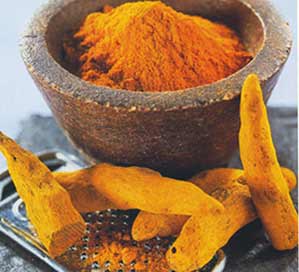
ATP production, according to Kremer's research, is not based on chemical energy release, as taught in universities today, but rests on the absorption of photons of light from the zero-point quantum medium. The details of Kremer's discovery are absolutely fascinating and the new theory also points to a simple biological cure. Curcuma, a root vegetable used abundantly in oriental cooking, has anti-cancer properties and Kremer explains how it is able to intervene in the process to turn the tide on the disease.
Turmeric (Curcuma longa) - curative spice and coloring agent -
Dr Kremer's paradigm changing discovery brings to mind another piece of cancer research that made headlines recently: Researchers at the University of Alberta have found that dichloroacetate (DCA), a simple, cheaply available substance, can successfully revive the mitochondria - our cellular ATP generators - which are somehow switched off in cancer cells. That Canadian research is being kept quiet though, because no one has figured out yet how or why DCA works. Perhaps Kremer's discovery of the ATP photon pathway could shed some light?
Kremer's article was first published in the Townsend Letter for Doctors and Patients - August/September 2007. Here is a copy:
- - -
The secret of cancer: "short-circuit" in the photon switch
by Heinrich Kremer, MD
(original here)
Change in the medical world-view of tumorology - The rational Cell Symbiosis Therapy concept
In western countries every third person suffers from some form of cancer, every fourth person dies of it. The prognoses of the WHO state that by the year 2050 half of all mortalities will be due to a cancerous disease. According to the prevailing cancer theories chance defects (mutations) in the DNA in the nucleus, which are regarded as irreparable, are considered to be the primary cause of the disease. Standard therapy in oncology (operations, chemotherapy and/or radiation therapy) is based on this assumption. The cure rates of cancer (minimum of 5 years survival after diagnosis) are given as being 45% (22% surgical treatment, 12% radiation therapy, 5% chemotherapy, 6% combined standard therapies). 60 –70% of patients with incurable cancer are palliatively treated with radiation therapy, 50% with chemotherapy and less than 1% of the patients are treated surgically (EU data, 2003). In the USA, for instance 20% of the overall health budget is spent annually on chemotherapy for cancer patients.
The Nobel Prize winner Professor Watson, who together with Crick discovered the double helix of DNA in the nucleus, the most prominent promoter of the 1971 "War on Cancer" succinctly declared in 2003: "First we have to understand cancer before we can cure it". The background to this sobering thought after decades of most intensive research efforts and a massive capital injection is the fact that the classic mutation theory of oncogenesis has been forever shaken by newer research. Under the mutation theory a tumor colony develops from a single "degenerated" body cell that through uncontrolled division is thought to pass on identical DNA defects to all daughter cells. However, it has become apparent that each individual cancer cell, even within the same tumor of a patient, features a different genetic variation.
The internationally respected cancer researchers Professor Weinberg from the MIT in Cambridge, USA and Professor Hahn from the Dana Farber Cancer Research Center in Boston, both supporters of the classic mutation theory, published in 2002 an overview of the ostensibly still puzzling six "diabolic acquired capabilities" of cancer cells. These attributes include the ability to:
1. resist exogenous growth-inhibitory signals
2. generate their own mitogenic signals
3. bypass apoptosis
4. acquire vasculature
5. gain potential immortality
6. invade and metastasize
The "Cell Dyssmybiosis Concept" (Kremer 2001) explained for the first time the six "acquired capabilities" of cancer cells as an evolutionary-biologically programmed natural (albeit overregulated) protective switch of the divisionally active human cells during permanent chronic cell stress. The origin of this concept was the evolutionary-biological discovery that humans owe their biological existence, like all nucleic single- or multi-cellular creatures (eukaryotes), to a unique act of integration deep in the history of evolution. Roughly 2 billion years ago two unicellular organisms without nuclei from the archaea and bacteria domains fused to a new single cell type that is now termed protista. Comprehensive comparative sequence analyses regarding the genetic make-up and specific proteins of archaea, bacteria and a multitude of eukaryotic organisms including humans produced an astonishing result: About 60% of the genes in a human nucleus originate from the primeval archaea (A genome) the remaining genes having a bacterial origin (B genome), which in particular in the nucleus are delegated by the bacterial symbionts that have survived up until today in all human cells as mitochondria (on average 1,500 per cell).
There is a controlled division of labour between the A genome and the B genome: The A genome dominates the late cell division phases, the B genome drives the early cell division phase and the differentiated cell performances of the respective cell types. From these fundamental cellular biological facts, on the basis of the integration of a large number of new experimental and clinical research data the cell symbiosis concept leads to the following conclusions about oncogenesis and cancer therapy:
1. There is a controlled alternate switch between the mitochondria and both nuclear subgenomes
2. Transformation to cancer cells is a functional (not structural) failure of this alternate switch, after the divisional phase cells are no longer sufficiently able to switch back to the differentiated cell performance phases
3. The cause of this permanent function failure is the gradual deficiency of one of the central functions of mitochondria, namely to supply ca. 90% of the "universal energy-storing and energy-transporting molecule" adenosine triphosphate (ATP) for practically all biosyntheses and metabolic processes. Under normal circumstances roughly one's body weight of ATP has to be synthesized and then broken up every day. ATP cannot be stored and the actual stock in human beings is enough for only 5 seconds. When the mitochondrial functions are disturbed cancer cells switch intermittently or permanently to the archaic form of ATP synthesis in the cytoplasm (glycolysis) with, potentially, up to a 20-fold increase in the glucose turnover at the cost of the organism as a whole (cachexia resulting from the forced degradation, especially of muscle proteins for the benefit of carbon intermediary products for glycolysis, is one of the most frequent causes of death in cancer patients)
4. Hitherto perceptions about the synthesis and function of ATP molecules, the basis of all cellular biological medical theories, are, however, objectively false. ATP has 3 molecule groups: 1 base adenine ring molecule that absorbs the light quanta near to ultra-violet levels of 270 nm, 1 sugar molecule with 5 carbon atoms as well as a 1 molecule string with 3 phosphate groups.
The current dogma, based on a theory formed more than 60 years ago by the later Nobel Prize winner Lippmann, is that electron energy is transferred in the respiratory chains of mitochondria (of which there are literally thousands in every mitochondrion as shown by EM photographs) on discharge of "energy-rich" electrons from nutrients via a kind of electrochemical battery, to protons which for their part drive ATP synthesis energetically and store their surplus energy in the phosphate bonds of ATP. These "energy-rich" phosphate bonds of ATP transported into the cytoplasm then release this stored energy via hydrolysis mainly to maintain the energetic processes of cell metabolism. Biochemical experiments have clearly shown, however, that the phosphate bonds of ATP are not especially rich in energy and on hydrolysis only heat energy is released that can at the most be used for heat production by isotherm cells (constant cell temperature). The fundamental question of the actual mechanism for the acquisition of cell energy remains unanswered. This fact explains the predominant failure of cancer prevention and therapy up until now.
5. Biochemistry and medical science have failed to this day to explain the function of the adenine groups of ATP as no biochemical reaction with this adenine ring molecule is shown. However, an understanding can be gained, within the framework of the cell symbiosis concept, from the biophysical attributes of light absorption of the adenine group. All essential components of mitochondrial cell respiration are light absorbing molecules with characteristic "frequency windows" of absorption maxima from nearly UV spectrum to the longer wave yellow/orange spectral range of visible light up to ca. 600nm. Yet the source of the electromagnetic energy is not sunlight. In fact a low frequency pulsating electromagnetic field is induced by the constant flow of uncoupled, paramagnetic aligned electrons in the respiratory organelles. The electromotive power generated by this process is catalytically enormously strengthened by the enzyme complexes of the respiratory chain (acceleration factor1017). This effects an interaction between the electrons and the protons likewise aligned parallel to the induced magnetic field dependent on the strength of the magnetic field between the antiparallel aligned electrons and protons. This process produces a quantum dynamic transfer of information via photon exchange energy. The source of photons is ultimately fluctuations of resonance frequencies of the physical vacuum (zero-point energy field). The transferred information is stored in the spin of the protons that proceed to the ATP synthesis complex via proton gradients. There the resonance information is transferred by a unique rotation system to the adenine group of ATP whose electrons can move freely in the alternating double bonds of the ring molecules. The ATP serves as an "antennae molecule" for the reception and relaying of resonance information from the "morphogenetic background field". Human symbiosis is consequently not a heat power machine but a light frequency modulated information transforming medium. All the time this cell symbiosis is resonance coupled with the lowest not yet materialized energy status (physical vacuum as inexhaustible "global information pool").
6. In oncogenesis, for a diversity of reasons, there is a functional disturbance especially to the 4th enzyme complex of the respiratory chain. The task of this complex, according to conventional opinions, is to transfer the inflowing electrons to molecular oxygen at the end of the respiratory chain and thus reduce it to water. In the cell symbiosis concept, however, the crucial factor is that in reducing O2 to water completed electron couplings induce an antimagnetic impulse, and the electromagnetic alternating field for resonance information transfer switches on and off at an extremely fast periodic time interval (in picoseconds). If the electron flows to O2, however, are permanently disturbed then a failure in the modulation of ATP occurs and increasing numbers of oxygen and other radicals form that can attack and damage the macromolecules (nucleic acids, proteins, lipids, carbohydrates). In order to prevent this danger the key enzyme hemoxygenase upregulates. This enzyme uses O2 as cofactor for the production of carbon monoxide (CO). In cases of long-term surplus production CO gas has crucial effects on cancer cell transformation:
· CO gas effects a characteristic phase shifting of the absorption of visible light from components of the respiratory chain and as a result "short-circuits" the photon switch for the modulation of the information transfer to the mitochondrial ATP· CO gas activates in the cytoplasm certain regulator proteins for the stimulation of the cell division cycle also without external growth signals (see above: 1st "acquired capability")
· CO gas effects via enzymatic overactivation of the important secondary messenger substance cyclic guanosin monophosphate (cGMP) the inhibition or blockade of communication between neighboring cells (2nd "acquired capability" of cancer cells)
· CO gas blocks programmed cell death by bonding onto the bivalent iron in important key enzymes (3rd "acquired capability" of cancer cells)
The result is a polar program reversal: The transformed cancer cells remain trapped, dependent on the degree of malignancy, in a continuous cell division cycle and can not switch back to the differentiated cell performances of the respective cell types without biological compensatory aid. According to recent clinical knowledge the cancer cells become especially malign and disperse massive metastatic cells when the O2 supply to tumor cells via capillary blood vessels is impeded. In these cases chemotherapy and radiation treatment are no longer effective as without the presence of molecular oxygen programmed cell death of the cancer cells can no longer be induced. In this situation cancer patients are considered incurable by oncologists using standard cancer therapy.
The cell symbiosis concept postulates that when the cofactor O2 is deficient then the even more effective cyanide gas (CN-) is formed insteadof CO. CN- is in humans the strongest mitochondrial respiratory poison and produces an even stronger phase switching of the absorption of visible light, probably by the well known inhibition of the reduction of trivalent irons to bivalent irons of certain hemocytochromes of the respiratory chain. This hypothesis can support the evolutionary-biological views of the cell symbiosis concept as cancer cells regress de facto to unicellular organisms (as a result of the loss of cell to cell communication with neighboring tissue cells) and that is why they behave like "cell parasites" (4th, 5th, and 6th "acquired capability" of cancer cells). Cancer cells represent in this sense a regression to the early eukaryotic stage of a single cellular protista colony and so use as a strategy of survival the conserved archive of evolution in human nuclear genomes depending on the actual given milieu conditions of the individual cancer cells (for the individual genetic variations, see above).
7. In 2003, American cancer researchers confirmed a functional disruption of
cancer cells in the 4th complex of the respiratory chain despite simultaneously intact messenger RNA and intact mitochondrial DNA, without being able to explain this phenomenon. However, at the end of 2002 a cancer research group from Helsinki University, after many years of animal experiments and clinical studies, were able to exactly document for the first time - using electronmicroscopes and mass spectrometers – that the transformation to cancer cells is actually caused by the loss of control of the cell division cycle of the mitochondria. The clinical research team could demonstrate that the tumor cells after a relatively short time had re-programmed to intact, normal differentiated cells without signs of programmed cell death by using a particular experimentally mediated bioimmunological compensation therapy on various human cancer diseases. These patients under conventional tumor therapy had a survival status of on average less than 12 months. In 2003 researchers from the Anderson Cancer Research Center of the University of Texas in Houston published the first wide-ranging overview about the hundreds of animal experiments on the effects of curcumin, the active ingredient of turmeric (Curcuma Longa, from the ginger family, biochemically, curcumin I from the molecular family of polyphenols, also termed bioflavonoids, synthesized from plants) on cancer cells and metastases. The researchers were amazed to discover that curcumin effectively inhibited nearly all signal paths in tumor cells and metastases. The researchers were unable to provide an explanation to this wide-ranging effect. The actions of curcumin can, however, be explained if you know that curcumin in the violet spectral range of visible light absorbs with nearly the same wavelength - 415 nm - as the electron-transferring molecule cytochrome c that is more rapidly broken up by the protective enzyme hemoxygenase in cancer cells. In cancer cells curcumin, so to say, bridges the III and IV complex photon switch "short-circuit" of the respiratory chain in mitochondria and thus normalizes the information transfer for maintaining modulation of ATP. The quoted research data show that (in opposition to the prevailing cancer theories of supposedly irreparable gene defects in the nucleus) the demonstrated functional disruptions of the transfer of information in cell symbionts can be re-normalized by means of an adequate biological compensation therapy. The concept of cell symbiosis therapy (Kremer 2001) derived from knowledge gained from cell symbiosis research has in the meantime led to spectacular therapeutic successes (in individual cases even in cancer diseases that had been declared incurable). There is a broad spectrum of classes of substances responding to natural light available and the potential is by no means exhausted. What is desperately needed, however, is a comprehensive overhaul of the current state of research with the aim of developing optimized therapeutic formulations and to make them available for clinical and therapeutic practice. Admittedly, achieving this purpose through an interdisciplinary research group within the established health system is not to be expected in the foreseeable future, as conventional medical science has largely remained stuck in the one-sided thermodynamic energy concepts of the 19th Century.
Literature:
Heinrich Kremer MD: The Silent Revolution in Cancer and AIDS Medicine
510 pages, 77 illustrations and 17 plates
To be released at www.Xlibris.com Fall 2007Other articles by Dr Kremer are available on www.ummafrapp.de (the site is in German - follow bright red links for English articles)
See also:Eat (Less) to Live (Longer) - New study reveals why restricting calories may lead to longevity
The researchers determined from cultures of human embryonic kidney cells that lower caloric intake sends a signal that activates a gene inside cells that codes for the enzyme NAMPT (nicotinamide phosphoribosyltransferase). The two- to four-fold surge in NAMPT in turn triggers the production of a molecule called NAD (nicotinamide adenine dinucleotide), which plays a key role in cellular metabolism and signaling. The uptick in NAD levels activates the SIRT3 and SIRT4 genes, increasing levels of their corresponding SIRT3 and SIRT4 enzymes, which then flood the interior of the mitochondria. Sinclair says he's not sure exactly how SIRT3 and SIRT4 beef up the mitochondria's energy output, but that events leading to cell death are at the very least delayed when there are vast quantities of the enzymes.Mitochondrial DNA mutations can cause degenerative heart and muscle disease
A single change in the DNA of mitochondria – the cellular power plants that generate energy in all human cells – has been found to cause degenerative heart and muscle disease, according to University of California, Irvine researchers.As the mitochondrial DNA of our cells accumulates damage with age, the blueprints required to sustain energy production are lost, the body's equivalent of a brownout. The resulting age-related decline in cellular energy production ultimately leads to tissue and organ failure and the development of clinical disease or illness. Thus the accumulation of mtDNA damage may explain aging and the delayed-onset and progressive course of age-related diseases and aging.
When Science Fiction Becomes Science Fact: Electromagnetism and Life
posted by Sepp Hasslberger on Tuesday August 28 2007
updated on Friday October 15 2010URL of this article:
http://www.newmediaexplorer.org/sepp/2007/08/28/cancer_the_atpphoton_hypothesis.htm
Related ArticlesCancer and ATP: The Photon Energy Pathway
Could cancer be a functional deviation of the cellular energy production mechanism that is open to correction by relatively simple means instead of a genetic mutation that is passed down through cell division? Heinrich Kremer, MD, says that this is indeed the case. His hypothesis of a photon-mediated cellular energy pathway may turn out to substantially add to our understanding of what cancer is, and why such natural substances as... [read more]
May 23, 2007 - Sepp HasslbergerCancer Research - A Super Fraud?
"Everyone should know that most cancer research is largely a fraud and that the major cancer research organisations are derelict in their duties to the people who support them." - Linus Pauling PhD (Two-time Nobel Prize winner). Have you ever wondered why, despite the billions of dollars spent on cancer research over many decades, and the constant promise of a cure which is forever "just around the corner", cancer continues... [read more]
July 02, 2003 - Chris GuptaFluoride-Cancer Study Cover Up
This update includes Pam Killeen's recent (August 2005) interview with Paul Connett, PhD. This excellent 58 minute discussion will give you a quick snapshot of this whole sordid issue and is must hear! The following link is referenced in the above interview and is an eye opener: 50 Reasons to Oppose Fluoridation. This is an absolute required reading for anyone with children or planning to have them! Allowing this madness... [read more]
August 17, 2005 - Chris GuptaCancer: Intravenous Vitamin C Effective Treatment
Studies during the 1970s first suggested administration of high doses of ascorbate might provide a clinical benefit for treating cancer, but later studies using the same high doses found no benefit. However, researchers now say the original studies used intravenous and oral ascorbate, while subsequent studies used only oral administration. Recognizing those differences might account for the disparate clinical outcomes, Mark Levine and colleagues at the National Institutes of Health... [read more]
September 13, 2005 - Sepp HasslbergerCancer And Micronutrients: A Connection Worth Exploring?
According to German doctor Ryke Geerd Hamer's iron-bound rules of cancer, the development of a tumoral growth invariably follows a highly traumatic experience that is too intense to have been fully "confronted" or looked at. Each different kind of trauma, according to Hamer, leads to corresponding brain edemas that can be detected by modern scanning methods and eventually to a tumorous growth or, in the case of bone cancer, to... [read more]
March 15, 2006 - Sepp HasslbergerFlowers and Spices: Ayurveda or Toxic Chemotherapy?
Ayurvedic medicine uses foods, spices, flowers, and other remedies found in nature to both prevent and heal. Compared with Western medicine, which has a virtual monopoly on deciding what is "scientific" and what is not, the ancient healing art of the Indian subcontinent is undervalued although according to the World Health Organization, 65% of the population in rural areas in India use Ayurveda and medicinal plants to help meet their... [read more]
April 06, 2006 - Sepp Hasslberger


