



Air Car or Electric Vehicle?
Electric vehicles, long touted as the future of pollution-free personal transport, don't seem to be doing so well. General Motors is abandoning its experiment with the EV-1- recalling the leased electric cars from those trying them out, according to a report in the New York Times. But another zero-emission driving experience may be just around the corner - the Air Car. Former Formula 1 engineer Guy Nègre from France is quietly working to make his compressed-air car the future wave of European eco-vehicles.
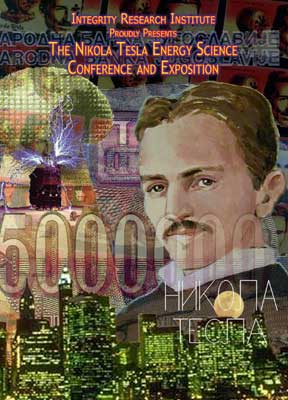
Read about these developments on the technology front in the Future Energy News Newsletter, prepared by Tom Valone of the Integrity Research Institute. Also included: A discussion of popular hydrogen myths. If you live in the Washington DC area, you might be interested in the First Nikola Tesla Energy Science Conference and Exposition, to be held November 8 - 9, 2003.
From:
Future Energy eNews
October 24, 2003
The Air Car Goes on Display- First Demonstration. 50 km/hr for 300 km on free air and an electric compressor (FE eNews, Feb. 5, 2003).Electric Vehicle Abandoned: The Death of GM's EV-1. G.M. wants all its electric cars out of private hands when the last leases expire.
The Air Car Goes on Display: First Public Demonstration
From: Info The Air Car
To: Integrity Research Institute, Thomas Valone
Sent: Saturday, October 18, 2003 9:47 AM
Subject: Re: Production inquiryDear Friend,
We have pleasure in inviting you to the first ¨live¨ presentation of the MDI Air Car. www.theaircar.com
As somebody interested in the pollution-free, innovative technology of the air car, we would like you to join us at the show, which takes place on 7th November 2003, at 10.30 am at the Juan Carlos I hotel in Barcelona.
We will have on show a range of prototypes, one of which will be demonstrated running on the hotelÂ's helipad. Director General of MDI, Mr Guy Nègre, with his Finance Director Mr Paul Durand, will be present to answer all questions, both technological and economic, put forward by attendees. For the opening, we expect the presence of a senior politician from the Spanish government (to be confirmed). We are inviting exclusively investors and the national and international media.
Although we have already made three presentations, this will be the first time a working car will be shown and we will completely open our technology to the public. The previous presentations took place in Barcelona two years ago, where a prototype without an engine was displayed, in Sao Paulo, Brazil, where 600 professionals from the automotive sector met and the third in London some months ago, among those present being the British Environment Minister, Mr Meacher.
Since the room at the Juan Carlos I has a maximum capacity of 300 people, we urge you to confirm your and any companionsÂ' attendance soon by calling 00 34 93 362 37 00, asking for Anna Massana.
We thank you for your attention and hope to see you at the presentation in November.
Yours sincerely,
Miguel Celades Rex
MDI Official Representative for Spain,
Portugal, Latin America, UK & CanadaEnglish: http://www.theaircar.com
Español: http://www.motordeaire.com
The new model to be presented in Barcelona: The MiniCatRoad trial of the first prototype:
New applications: Public transport
Air Car - apparently invented in Russia 15 years ago
2007: Aircar to be manufactured in India
ata Motors, India largest automotive company, on Feb. 5, 2007 announced that it has signed an agreement with Moteur Development International (MDI) of France, inventors of the car, to develop a car that runs on compressed air, thus making it very economical to run and be almost totally pollution free. This technology competes with the electric car. The claimed advantage of compressed air over electric storage is that it is less expensive, has a faster recharge time and pressure vessels have a longer lifetime compared to batteries.Leased and Abandoned: Revolt of the EV-1 Lovers
By CHRIS DIXON, October 22, 2003, NY Times
LOS ANGELESTWO summers ago, Peter Horton drove home in the car of his dreams. Mr. Horton, a star of "Thirtysomething," had signed a three-year lease with General Motors for a Saturn EV-1 electric car, joining 800 other California and Arizona drivers behind the wheel of the most energy-efficient, lowest-emission vehicle ever produced by an American manufacturer.
Mr. Horton will not have it much longer.
Next July, he must return the car to G.M., which is ending the EV-1 project. That move has set off a contentious debate between the automaker, which introduced the model with great fanfare in 1996 but now says that demand was not high enough to justify keeping it on the market, and drivers like Mr. Horton, who not only like the car's environmental qualities but also the two-seater's pep and handling. G.M. wants all its electric cars out of private hands when the last leases expire in August 2004. The car was never offered for sale.
Most EV-1's, which are sitting on a vast lot in Van Nuys, Calif., will be dismantled and their parts recycled, G.M. says. About 75 will end up in Rochester, where they will be driven by the company's fuel-cell researchers and other employees; a handful will go to colleges and museums.
Disgruntled EV-1 lessees have formed a loose online support group, relaying stories and strategies as they try to hang on to their cars. In July, 100 celebrities, engineers and fans even gathered at the Hollywood Forever Cemetery and staged a mock funeral.
Some drivers have asked for lease extensions or offered to buy the cars and release G.M. from the responsibility of providing parts or service. They have even sent good-will checks of $1,000 or more.
G.M. says that extending the leases could cost the company lots of money in warranty claims and parts overhead. It argues that the release of liability would be a bad business decision, one fraught with peril if a buyer sells a car to someone who demands parts and service.
Adding to the dispute are assertions from angry lessees and a present and a former G.M. employee that the company is trying to erase all trace of a car that it never intended to succeed. The company denies this, saying it would never have spent $1 billion over the last decade on a car it did not plan to sell in large numbers.
The EV-1's history is intertwined with a 1990 California mandate that 2 percent of all cars sold in the state in 1998 be zero-emission vehicles, or cars that could not emit any of the usual tailpipe gases. The figure was to rise to 10 percent by this year. The mandate was bitterly fought by automakers, including G.M., as an unreasonable manipulation of the marketplace.
Yet in the early 90's, Roger Smith, who was G.M.'s chairman, publicly professed hopes that tens of thousands of EV-1's would soon travel up and down California, recharging their lead-acid batteries as they went at convenient plug-in stations.
That never happened. Construction of the car ended in 2000, with just over 1,000 vehicles made and 800 leased. Only a smattering of recharging stations was spread around the Los Angeles area.
Ken Stewart, the EV-1's brand manager, contends that the car is a success, at least technically. "It's still the most efficient car on the road," he said. "From a commercial perspective, it was a real struggle. No manufacturer goes into business to mass-produce vehicles only to end up with less than a thousand. The program gets to be cost-prohibitive when the numbers are so low. So at this point, why keep them on the road?"
Mr. Stewart said that with the leases expiring, it made sense to end the program. "We certainly want to honor everyone's lease for the full duration," he said.
California has since relaxed its 1990 law, and to meet the current mandate, automakers can include partial zero emission vehicles, which are particularly efficient but otherwise conventional. The list also encompasses cars and trucks powered by hydrogen fuel cells and hybrid gas and electric vehicles.
Toyota is already marketing its hybrid Prius, and Honda introduced the Insight and now the Civic Hybrid. Next year should bring hybrid sport utility vehicles from Ford and Lexus and hybrid pickups from G.M. and Dodge, a unit of DaimlerChrysler.
Chelsea Sexton, a former Saturn saleswoman and an EV-1 specialist until 2000, when G.M. stopped leasing EV-1's, described a strong demand at first for the original batch of several hundred EV-1's and then a drop after potential customers found the $550-a-month leases too expensive. This seemed especially high for a car that seats only two and has limited luggage space.
But, Ms. Sexton said, a 1997 recall to replace a faulty charger and inadequate batteries led to a reborn Generation II car with a $275 monthly lease and batteries with a range of 100 miles between charges, instead of 50 to 60 miles.
At that point, she said, interest increased. But G.M. built only 500 of these new models, enough to satisfy the California 2 percent mandate. "I was on my own waiting list for two years," she said. She eventually got a car, the same azure blue EV-1 that Mr. Horton now leases.
Ms. Sexton said that she was one of the last 13 EV-1 specialists. "As people left, I took over their business," she said. "In the end, I had thousands of people who were telling me, `I will write you a check today.' "
Mr. Stewart acknowledged that more than 4,000 people had requested more information about the car. "Yet in 2001," he said, "when the company asked those people if they would sign a lease for a car should one become available, less than 50 people wanted to go to the extent of actually leasing."
Another issue that divides the two sides is how committed General Motors was to the EV-1. One G.M. employee who was involved with the project said: "We launched the car in December of 1996, and by about April, I figured we'd been duped. They weren't marketing the vehicle." He insisted that his name not be used because he was afraid of job repercussions.
He said that the no-purchase policy limited the car's appeal. "Jay Leno even wanted one," he said, but G.M. turned him down.
Marvin Rush, an EV-1 lessee and a cinematographer for the "Star Trek" television series, used his own money — and the cast of the show — to create radio advertisements for the car. But they flopped, he said.
As he put it: "I tried to sell that car, and I think G.M. did their dead-level best. They only gave up when it was pointless."
Mr. Leno, who has an extensive car collection, confirmed that he wanted to buy an EV-1 but was turned down. He harbors no ill will. "G.M. is very proud of that thing," he said. "Here was essentially a zero-emissions car that had A.C., a stereo and low drag. It was sexy, too."
Mr. Leno said he drove a Lamborghini Diablo and an EV-1 for a week, "and I actually had more fun with the EV-1."
As Mr. Horton drove his EV-1 up the Pacific Coast Highway from Santa Monica, he expounded on its virtues.
"Along with simply loving the car," he said, "there was a sense that if this succeeded, it would significantly change the automotive landscape."
Mr. Horton, who wrote an article about his experience with the car for The Los Angeles Times Magazine, contends that G.M. is letting an opportunity slip by. "Why aren't they being saviors instead of trying to kill it? I think that's part of what drove a lot of its owners to stand up."
At a scenic overlook atop Topanga Canyon Road, Mr. Horton, who currently has a role in the new ABC series "Karen Sisco," met a few other disgruntled EV-1 compatriots: Ellen Crawford, a star of "E.R."; her husband, Mike Genovese; and Chris Paine, a filmmaker whose EV-1 lease has ended.
Mr. Paine, who said that he was considering producing a documentary on the car, describes the situation as "incredibly frustrating."
"We're getting massive smog alerts," he said, "and they're getting rid of a zero-emissions car."
Ms. Crawford compares her little red EV-1 to the defunct Los Angeles electric trolley system. "Those things went everywhere," she said, "and they ripped them out. We saved on gas, and we cleaned the air, but they're doing it again."
Provided as a courtesy from: Integrity Research Institute -- sponsor of the First Nikola Tesla Energy Science Conference & Exposition, November 8-9, 2003 in the Washington DC area.
Update November 19, 2003:Report on the Nikola Tesla Energy Science Conference & Exposition
From: David.Hamilton@*****
To: Ed.Wall@*****; Dave.Goodwin@****>
Sent: Monday, November 10, 2003 9:24 AM
Subject: trip reportI attended the local event this weekend celebrating the Centennial of Nikola Tesla's Wardenclyffe Tower (1903 -2003) Speakers included:
Paul Werbos, PhD., and Director of Electrical Communications at NSF gave a presentation on energy issues facing the World from a United Nations perspective and how space solar power is a possible long-term sustainability solution.
James Corum, PhD., spoke of the complexities of wireless power transmission and how the Earth must be part of a resonant system to achieve efficient power transmission on a large scale. He showed how Tesla had actually patented the Earth as part of the Wardenclyffe project.
Konstantin Meyl, Professor of Electrical Engineering at the University of Berlin gave a lesson on Scalar wave theory and a demonstration of wireless transmission. His theory is interesting and favors Faraday's findings over some key assumptions made by Maxwell in ignoring magnetic and electric potentials. The theory reduces to Maxwell if the evidence of magnetic or electric potentials are truly zero. Professor Meyl is quite popular in Europe on the lecture circuit and has sold his demo to schools and companies with some interesting findings. Since the energy transfer interacts with the Earth, there are reports of receiver gains of 2 to 3 times the transmitted power and it is felt that this is charge and ionic energy entrained from the atmosphere. He discussed this in detail and also the instability as atmospheric potentials vary with weather. None the less, as the recent solar flares showed, the ionosphere is a powerhouse of energy and if this is a method to interface with the ionosphere, it is a powerful source of sustainable energy. Good atmospheric coupling may require large towers as Tesla attempted at Wardenclyffe and in Colorado.
Elizabeth Rauscher, PhD., Nuclear and Astrophysics, gave a presentation on using the ionosphere for wireless power based on her experience with the development the ELF for Earthquake [prediction] detection and triangulation.
William Terbo, Tesla's closest living survivor opened the Sunday sessions with a talk from a family perspective and insight into Tesla's personality.
The remainder of Sunday covered a great many of the medical uses of Tesla developments and patents that have led to uses in sports medicine for fast healing of injuries and to aid poor healing in the elderly.
Although interesting on the whole and certainly leading to beneficial developments, there were not any obvious transportation benefits except for possibly rail based applications, but this critical need well understood by all for Human sustainability.
Respectfully,
David B. Hamilton
Recent development (May 2007):World's First Air-Powered Car: Zero Emissions by Next Summer
India's largest automaker is set to start producing the world's first commercial air-powered vehicle. The Air Car, developed by ex-Formula One engineer Guy Nègre for Luxembourg-based MDI, uses compressed air, as opposed to the gas-and-oxygen explosions of internal-combustion models, to push its engine's pistons. Some 6000 zero-emissions Air Cars are scheduled to hit Indian streets in August of 2008.
posted by Sepp Hasslberger on Monday October 27 2003
updated on Tuesday December 7 2010URL of this article:
http://www.newmediaexplorer.org/sepp/2003/10/27/air_car_or_electric_vehicle.htm
Related ArticlesBritish researchers invent thermal energy cell
The Telegraph, UK, reported on 18-05-2003: - In results independently verified at Bristol University, a team from Gardner Watts - an environmental technology company based in Dedham, Essex - show a "thermal energy cell" which appears to produce hundreds of times more energy than that put into it. If the findings are correct and can be reproduced on a commercial scale, the thermal energy cell could become a feature of... [read more]
June 04, 2003 - Sepp HasslbergerOriginal blueprints for 200 mpg carburetor found in England
Rather than a future technology, high mileage carburetors are inventions of the past, but unfortunately they did never make it to market. I wonder why. Now one of them may come back to haunt the oil interests - a bit late, but nevertheless. An article published in Times Online on 19 April 2003 relates the story of how plans for the carburetor designed by Canadian inventor Charles Nelson Pogue in... [read more]
June 07, 2003 - Sepp HasslbergerThe Energy Racket
What does energy have to do with us? Are we not able to get electricity from "the grid" and fill our vehicles' tanks with various types of hydrocarbon combustibles - all for a reasonable price? Energy is one of the areas where a potentially desastrous monopoly is controlling what goes and what doesn't. Potentially desastrous because monopolies have the nasty habit of charging whatever the market will bear, and wiping... [read more]
August 24, 2003 - Sepp HasslbergerThe Whispering Wheel - Electric Diesel Hybrid
A Radio Nederland story tells about an experiment in progress in Apeldoorn, a small city in the Netherlands. A bus with its motors right in the wheels - actually the wheels form part of the motor itself. While the technology is not revolutionary, it is a smart application of what we presently have and a good step towards a more friendly public transport, both for the environment and for people.... [read more]
December 27, 2003 - Sepp HasslbergerKohei Minato and the Japan Magnetic Fan Company
This article is from the latest Future Energy eNews of April 5, 2004, sent out by Tom Valone of the Integrity Research Institute. The article on Kohei Minato's magnetic motor is one of several in the newsletter: 1. China's Voracious Energy Needs - How and where will China get the energy to maintain its economic growth? 2. Zero Point Energy Pursued by Two Aerospace Companies and DOD Agency - Aviation Week & Space Tech reviews the... [read more]
April 05, 2004 - Sepp HasslbergerWater + Sunlight + Catalyst = Hydrogen - Are We Ready For It?
Recently, I sent out an e-mail message to some people interested in the energy dilemma, linking an article that describes a potentially very significant discovery on how to manufacture hydrogen without input of electricity. The article says: Australian scientists predict that a revolutionary new way to harness the power of the sun to extract clean and almost unlimited energy supplies from water will be a reality within seven years. Using... [read more]
October 05, 2004 - Sepp Hasslberger


